⚠️ Disclosure: This post contains affiliate links. We may earn a commission at no extra cost to you.
⚠️ Disclosure: This post contains affiliate links. We may earn a commission at no extra cost to you.



If you’re a small business owner, solopreneur, or startup founder spending more than 10 hours per week on administrative tasks, email management, scheduling, or repetitive operations — this guide was written for you.
Virtual assistant (VA) services are no longer a niche tool used by Fortune 500 executives. In 2026, they are one of the most cost-effective growth levers available to small and medium-sized businesses (SMBs). According to research from the Global Outsourcing Association, companies that leverage virtual staffing solutions report an average 32% reduction in operational costs and a 27% increase in leadership productivity within the first six months.
But not all VA services are created equal. The market now spans AI-powered task automation tools, dedicated human VA platforms, freelance marketplaces, and hybrid models — each suited for different business types, budgets, and use cases.
This guide provides:
Before comparing platforms, it’s important to understand how the VA industry has structurally evolved. Three major forces have reshaped the market:
Platforms like Claude (Anthropic), ChatGPT (OpenAI), and Gemini (Google) have transformed what’s possible at the software layer. Today, AI assistants can autonomously handle email drafting, meeting summarization, CRM data entry, and customer FAQ responses. This has not made human VAs obsolete — it has elevated the baseline expectation for what any VA service should deliver.
Human VAs who don’t use AI tools are now considered less efficient than those who do. The best VA platforms of 2026 equip their assistants with AI-powered productivity stacks including tools like Notion AI, Otter.ai, Zapier Agents, and HubSpot’s AI assistant.
The normalization of remote work has created a mature ecosystem of collaboration tools — Slack, Asana, ClickUp, Trello, Google Workspace, Zoom, and Loom — that make managing remote VAs as seamless as managing in-house staff. Businesses no longer face the friction of “how do I work with someone I’ve never met.” That infrastructure now exists by default.
What was once a strategy reserved for enterprise companies — outsourcing non-core functions through business process outsourcing (BPO) — has become accessible to small businesses through VA platforms. Services like TaskVive, Wing Assistant, and MYVA360 essentially offer micro-BPO solutions: trained, managed, accountable remote workers delivered as a monthly service.
Understanding the full scope of task delegation is critical to getting ROI from any VA service. Here’s a comprehensive breakdown by function:
One of the most overlooked frameworks in small business decision-making is opportunity cost analysis. Before evaluating VA pricing, consider this:
| Metric | Without VA | With VA |
|---|---|---|
| Hours/week on admin tasks | 15–20 hrs | 2–3 hrs |
| CEO hourly value (at $100/hr) | $1,500–$2,000/week lost | ~$200–$300/week lost |
| Monthly opportunity cost | $6,000–$8,000 | ~$800–$1,200 |
| VA service cost (avg.) | — | $400–$1,200/month |
| Net ROI | Negative | 3x–6x positive |
When framed this way, even a $1,000/month VA service generates a net positive return if it frees up 10+ hours of a business owner’s time per week.
Each platform below has been evaluated on: task coverage, pricing transparency, VA quality, tool integrations, onboarding speed, scalability, and support quality.
Category: Dedicated Human VA Service | Best For: Small businesses, e-commerce, service businesses, agencies
TaskVive is purpose-built for small and medium-sized businesses that need reliable, skilled human VA support without the complexity of hiring, managing, and retaining staff. Unlike marketplace-based platforms where quality varies, TaskVive delivers pre-vetted, trained assistants matched to your specific business needs.
What makes TaskVive different from other VA services: TaskVive operates on a managed VA model — meaning your assistant is not just matched to you and left unsupported. Each VA is actively managed by a TaskVive team lead who monitors task quality, response times, and client satisfaction. This creates accountability at both the VA and platform level — something most competitor services lack.
Core Capabilities:
Tool Ecosystem Compatibility: TaskVive VAs are trained in the core remote work stack including Asana, Slack, Trello, Notion, Google Workspace, Zoom, Loom, ClickUp, HubSpot, Shopify, and more. This means zero ramp-up time on tools your business already uses.
Onboarding Process:
Transparency & Accountability:
Pricing: Flexible plans based on hours needed. No long-term contracts. Custom enterprise plans available.
Verdict: For small businesses that want a VA partner — not just a freelancer — TaskVive delivers the accountability, consistency, and quality that matters for sustainable growth.
Category: Premium Dedicated VA Service | Best For: Established businesses needing senior executive support
Belay is one of the most respected names in the US-based VA industry, known for its rigorous VA selection process and focus on executive-level administrative support. Their VAs are experienced professionals — many with backgrounds in corporate administration, accounting, and operations management.
Core Capabilities:
Integrations: Google Workspace, Microsoft 365, QuickBooks, Expensify, Slack, Zoom
Pricing: Starts at approximately $1,400/month — positioned at the premium end of the market
Ideal Client Profile: Business owners generating $500K+ annually who need high-trust, senior-level VA support and can justify the premium pricing
Limitation: The high price point makes it inaccessible for early-stage small businesses or bootstrapped startups.
Category: Affordable Dedicated VA Service | Best For: Solopreneurs, coaches, consultants, early-stage founders
Founded in the UK, Time Etc has built a strong reputation for connecting solopreneurs and small teams with experienced virtual assistants — many of whom are ex-corporate professionals looking for flexible remote work arrangements.
Core Capabilities:
Integrations: Google Workspace, Dropbox, Asana, Basecamp, Slack
Pricing: From $29/hour; bundle plans bring effective hourly rates down. No minimum monthly commitment.
Differentiator: The “no minimum hours” policy makes it ideal for businesses with variable or unpredictable VA needs — you pay for what you use.
Limitation: Less suitable for complex, high-volume, or specialized tasks like CRM management, paid advertising, or advanced bookkeeping.
Category: Affordable Full-Time VA Service | Best For: Startups and high-volume task businesses needing dedicated, process-driven support
Wing Assistant stands out for offering full-time dedicated VAs at rates significantly lower than US-based services, backed by a proprietary task management platform that provides visibility, accountability, and workflow structure.
Core Capabilities:
Integrations: 100+ tools including Slack, Asana, ClickUp, Notion, HubSpot, Shopify, QuickBooks, Google Workspace, Zoom
Pricing:
Differentiator: The Wing platform provides built-in task tracking, time tracking, and communication — reducing the management overhead for business owners who aren’t used to working with remote staff.
Limitation: VAs are primarily based in the Philippines — time zone differences may require async communication for US/EU businesses.
Category: US-Based Dedicated VA Service | Best For: Tech-forward startups and entrepreneurs who use SaaS-heavy workflows
Zirtual focuses exclusively on US-based, college-educated virtual assistants — a key differentiator for businesses where communication quality, cultural familiarity, and time zone alignment are non-negotiable.
Core Capabilities:
Integrations: Salesforce, HubSpot, Asana, Google Workspace, Slack, Zoom, Dropbox, Evernote
Pricing: Plans start at ~$549/month for 12 hours/month; scales to 50+ hours
Differentiator: All Zirtual assistants go through a structured training program and are tested on core software competencies before being matched with clients.
Limitation: Higher price per hour compared to offshore VA services; limited specialist task coverage (e.g., advanced bookkeeping or paid ads management).
Category: Team-Based VA Service | Best For: Businesses that need reliable, uninterrupted VA coverage across time zones
MYVA360 operates on a team model — every client gets a dedicated primary VA backed by a full support team. This eliminates the single point of failure problem that plagues traditional VA arrangements (sick days, vacations, turnover).
Core Capabilities:
Integrations: Slack, Asana, ClickUp, HubSpot, Salesforce, Google Workspace, Zoom, Shopify
Pricing: Plans start at approximately $400/month
Differentiator: The team backup model is particularly valuable for businesses where VA downtime has a direct impact on customer experience or operations.
Category: Freelance Marketplace | Best For: Project-based, specialized, or short-term VA needs
Upwork remains the world’s largest freelance marketplace and offers unmatched access to a global pool of virtual assistants across every possible specialization — from e-commerce VAs and SEO assistants to multilingual customer support specialists and Shopify experts.
Core Capabilities: Virtually unlimited — from basic admin to highly specialized technical work
Key Entities on Platform: LinkedIn outreach specialists, Amazon FBA VAs, Shopify managers, WordPress VAs, real estate VAs, legal administrative assistants, financial research analysts
Integrations: Built-in time tracking, milestone payments, contract management
Pricing: $5–$80+/hour depending on skills, experience, and location
Differentiator: Maximum flexibility and the widest talent pool in the industry. Ideal when you need a very specific skill set that general VA platforms can’t provide.
Limitation: Quality is inconsistent. Vetting, interviewing, and managing freelancers requires significant time investment. No dedicated account management or quality assurance.
Best practice: Use Upwork’s “Top Rated” and “Expert-Vetted” badges as quality filters. Always start with a small paid test project.
Category: Task-Based VA Service | Best For: Business owners with sporadic, quick task needs
Fancy Hands operates on a request model rather than a retainer — you submit discrete tasks (make a phone call, research three vendors, schedule an appointment, fill out a form) and a team of US-based assistants completes them, typically within a few hours.
Core Capabilities:
Pricing: From $17.99/month for 5 requests; scales to $49.99/month for 15 requests
Differentiator: Zero commitment, immediate access, no onboarding. Perfect for business owners who occasionally need help without a recurring VA relationship.
Limitation: No dedicated VA — tasks are handled by whoever is available. Not suitable for complex, relationship-dependent, or confidential tasks.
Category: Premium UK-Based VA Service | Best For: UK businesses, professional services, and consultancies
Virtalent is one of the UK’s most respected VA platforms, known for an extremely selective vetting process — only the top 2% of VA applicants are accepted. Their assistants are university-educated professionals with significant prior career experience.
Core Capabilities:
Integrations: Google Workspace, Microsoft 365, Slack, Asana, Trello, Mailchimp
Pricing: Plans start at ~£270/month (approximately $340/month)
Differentiator: The rigorous selection standard means clients get a consistently high-quality VA. Particularly strong for UK-based businesses where cultural context, communication style, and GMT time zone alignment matter.
Category: AI-Powered Virtual Assistant | Best For: Automating repetitive, language-based, and analytical tasks at near-zero cost
No guide to virtual assistant services in 2026 would be complete without addressing AI-powered assistants. Tools like Claude (Anthropic), ChatGPT (OpenAI), and Gemini (Google) represent a fundamentally different category — one that complements rather than replaces human VAs.
What AI Assistants Excel At:
Key Integrations (via API/Zapier/Make): Gmail, Slack, Notion, HubSpot, Salesforce, Google Drive, Shopify, Zendesk — enabling AI automation within existing workflows
Pricing:
Critical Limitation: AI assistants in 2026 still require human oversight for tasks involving judgment, relationship management, confidential context, and real-world action execution. They work best as a force multiplier for human VAs, not a standalone replacement.
The 2026 Power Stack: The most productive small businesses use AI tools for draft generation and research (automated layer) + a human VA for review, communication, and judgment-based execution (human layer).
This is the most debated question in the VA industry today. Here is a rigorous, entity-anchored comparison:
| Dimension | AI VA (Claude, ChatGPT, Gemini) | Human VA (TaskVive, Belay, Wing) |
|---|---|---|
| Cost | $0–$50/month | $400–$2,000+/month |
| Availability | 24/7/365 | Business hours (varies by time zone) |
| Response latency | Milliseconds | Minutes to hours |
| Task type fit | Structured, language-based, analytical | Judgment-based, relational, process-driven |
| Emotional intelligence | None | High |
| Contextual memory | Limited (per-session) | Ongoing and cumulative |
| Tool execution | With integrations (Zapier, Make) | Native, direct action |
| Quality consistency | High for defined tasks | Varies; improves over time |
| Confidentiality handling | Requires careful prompting | Can be legally contracted |
| Learning & adaptation | Static per session | Continuous improvement |
| Use case: Email drafts | ✅ Excellent | ✅ Excellent |
| Use case: CRM updates | ⚠️ Needs integration | ✅ Native |
| Use case: Customer calls | ❌ Not capable | ✅ Native |
| Use case: Research reports | ✅ Excellent | ✅ Excellent |
| Use case: Vendor negotiation | ❌ Not capable | ✅ Native |
Strategic Conclusion: Use AI to automate the volume of low-complexity, language-based tasks. Use a human VA to handle the judgment, communication, and execution tasks that drive business outcomes. The two are not competitors — they are a productivity stack.
Rather than giving a generic “it depends” answer, here is a structured decision framework based on business maturity and task type:
Priority: Maximum output, minimum cost
Recommended stack:
Total monthly cost: $50–$150/month
Priority: Consistent support, time reclamation, operational systemization
Recommended stack:
Total monthly cost: $400–$800/month
Priority: Team-level support, process documentation, specialist coverage
Recommended stack:
Total monthly cost: $1,000–$3,000/month
The effectiveness of any VA engagement depends heavily on tool and workflow alignment. Before hiring, confirm your VA is proficient in the tools your business already uses.
Even the best VA will underperform without a structured onboarding process. Here is the TaskVive-recommended onboarding framework:
Delegating access to your business systems requires intentional security practices. Follow these non-negotiables:
Access Management:
Contractual Protections:
Data Handling:
For businesses under $100K revenue, the most cost-effective approach is combining AI tools (Claude or ChatGPT at $20/month) with a part-time human VA through platforms like TaskVive or Time Etc. This hybrid model delivers broad coverage at $200–$500/month — far less than a part-time employee while providing comparable output.
A virtual assistant is typically a single individual providing administrative or operational support. A BPO service handles entire business functions — such as customer service, accounting, or HR — through a dedicated team. Platforms like MYVA360 and Wing Assistant occupy a middle ground, offering team-backed VA support that approaches the BPO model for SMBs.
Research suggests small business owners spend an average of 15–20 hours per week on administrative tasks. In practice, most businesses start with 20–40 hours/month of VA support and scale from there as confidence in the relationship grows.
Yes — CRM management is one of the most high-value tasks to delegate. Proficient VAs can handle data entry, lead enrichment, follow-up sequencing, pipeline updates, and reporting. Confirm CRM proficiency before hiring; platforms like TaskVive, Wing Assistant, and Zirtual explicitly train their VAs on major CRM platforms.
AI-powered tools are immediately available. Freelance marketplaces (Upwork) require 3–7 days to post, interview, and hire. Dedicated VA platforms (TaskVive, Belay, Zirtual) typically complete matching and onboarding within 5–10 business days.
Yes, with proper access management. Use a password manager to share credentials, grant minimum necessary permissions, and choose platforms where VAs are contractually bound by NDAs and data confidentiality agreements.
When accounting for opportunity cost (the value of the business owner’s freed-up time), most businesses see a 3x–6x return on VA investment within the first 90 days. The ROI improves further as the VA becomes more familiar with the business and the scope of delegation expands.
To build complete topical authority on virtual assistant services, this article is part of a content cluster that includes:
| Platform | Best For | VA Type | Starting Price | Top Integrations |
|---|---|---|---|---|
| TaskVive | Overall best for SMBs | Human (dedicated) | Custom | Slack, Asana, HubSpot, Shopify |
| Belay | Premium executive support | Human (US-based) | ~$1,400/mo | QuickBooks, Google Workspace |
| Time Etc | Solopreneurs, low budget | Human (dedicated) | ~$29/hr | Google Workspace, Asana |
| Wing Assistant | High-volume, affordable | Human (dedicated) | $499/mo | 100+ tools |
| Zirtual | US-based startup support | Human (US-based) | ~$549/mo | Salesforce, HubSpot, Asana |
| MYVA360 | Team-backed coverage | Human (team model) | ~$400/mo | HubSpot, Shopify, Slack |
| Upwork | Specialized project work | Human (freelance) | $5–$80+/hr | Built-in platform |
| Fancy Hands | Quick, one-off tasks | Human (shared pool) | $17.99/mo | Web-based |
| Virtalent | UK-based professionals | Human (dedicated) | ~£270/mo | Google Workspace, Slack |
| Claude / ChatGPT | AI automation & drafts | AI | $20/mo | API, Zapier, Slack |
Choosing a virtual assistant service is not a cost-cutting decision — it is a strategic growth investment. The businesses that scale most efficiently in 2026 are those that identify their highest-value hours, ruthlessly protect them, and delegate everything else to skilled, accountable support.
Whether you start with a $20/month AI tool or invest in a dedicated human VA platform, the key is to start delegating. Every week you spend managing your own inbox, updating your own CRM, and scheduling your own meetings is a week you’re not spending on what only you can do: building relationships, closing deals, and growing your business.
TaskVive is designed for exactly this moment. Purpose-built for small businesses, with pre-vetted VAs, transparent workflows, and a managed service model that removes the friction of hiring and managing remote staff.

Ms.Sultana brings over 16 years of expertise working with global Clients by providing different skills and Services. For the last 5 years working as an Affiliate marketer, specializing in high-ticket campaigns that drive exponential growth. She holds a degree in Computer Science and Engineering as well as achieved many more skills certificates from different institute/academies/Platform. As part of the Elite Global Marketing team, Sultana has helped clients generate millions in revenue through strategic partnerships, innovative funnels, and data-driven insights.







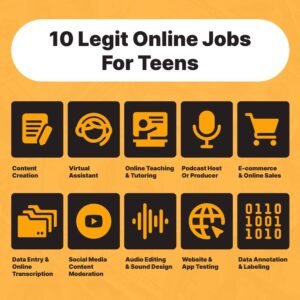






How can I earn $500 per day as a student? 9 realistic side hustles, time tips, and a step-by-step plan to reach $500/day while studying.
Answered: How can I make $100 a day legit? Learn proven side hustles, online jobs, and simple steps to earn $100 daily—no scams, quick start tips.
Free up hours by outsourcing 9 Tasks You Can Outsource To A Virtual Assistant — practical tasks to delegate and boost productivity fast.