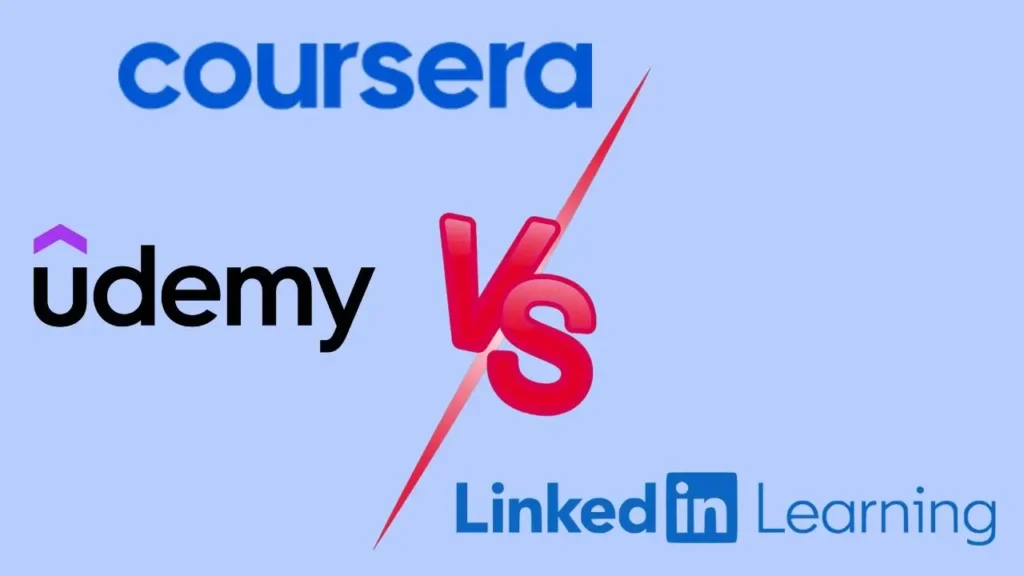

Choosing between Coursera, Udemy, and LinkedIn Learning in 2026 comes down to career intent, credential value, and how employers recognize your skills. Coursera is widely trusted for its university-led courses, professional certificates, and partnerships with global companies like Google, IBM, and Meta. Udemy operates as a skill-focused course marketplace, popular for hands-on learning, freelancing skills, and rapid upskilling. LinkedIn Learning, tightly integrated with the LinkedIn professional network, emphasizes career development, role-based learning paths, and resume-aligned skills.
In this Coursera vs Udemy vs LinkedIn Learning comparison, we examine course quality, certification credibility, pricing models, instructor expertise, learning flexibility, and job-market relevance to help you determine which online learning platform offers the best return on investment for upskilling, career growth, or professional transitions in 2026.
Coursera vs Udemy vs LinkedIn Learning: Which Is Best in 2026?
- Coursera offers university-backed courses and professional certificates from institutions and companies like Google, IBM, and Meta, ideal for learners seeking recognized credentials and structured programs.
- Udemy is a marketplace-based learning platform focused on practical, skill-based courses, best for fast upskilling, freelancers, and hands-on learners.
- LinkedIn Learning integrates directly with LinkedIn profiles, emphasizing career development, role-based learning paths, and employer-aligned skills.
Best choice depends on:
career goals, certificate recognition, pricing model, learning flexibility, and job-market relevance in 2026.
Introduction To Online Learning Platforms
Online learning platforms have changed how people learn. They offer courses in various subjects. Users can learn at their own pace and convenience. Three popular platforms are Coursera, Udemy, and LinkedIn Learning. Each has unique features and benefits. Understanding these platforms helps users choose the right one for their needs.
Rise Of E-learning
The demand for online learning has grown rapidly. More people seek flexible education options. Here are some reasons for this rise:
- Accessibility from anywhere with an internet connection
- Wide range of subjects and courses available
- Ability to learn at one’s own pace
- Cost-effective compared to traditional education
Many professionals are turning to online courses. These courses help them gain new skills. This shift shows the importance of e-learning in today’s world.
Importance In Professional Development
Online learning plays a crucial role in career growth. It helps individuals stay competitive in their fields. Here are some key benefits:
- Skill Enhancement: Learn new skills quickly.
- Networking: Connect with peers and industry experts.
- Certification: Earn certificates to boost your resume.
- Flexibility: Study anytime, anywhere.
Employers value candidates with continuous learning. Online platforms provide a way to keep skills updated. They also offer opportunities for self-improvement. This importance cannot be overlooked in today’s job market.
What Is Coursera and Who Is It Best For?
Coursera was built to replicate the rigor of higher education in a digital environment. It partners with top universities and multinational companies to offer courses, certificates, and even full degrees.
Coursera is best for learners who:
- Want recognized credentials, not just skill exposure
- Prefer structured programs over standalone lessons
- Are planning a career transition into fields like data science, AI, business, healthcare, or IT
Most Coursera programs follow a clear progression: theory, practice, graded assessments, and capstone projects. This structure appeals to employers because it mirrors traditional academic and corporate training models.
Coursera also offers:
- Professional Certificates (Google, Meta, IBM, Microsoft)
- University-issued certificates
- Online bachelor’s and master’s degrees
Accredited Courses And Degrees
Coursera provides accredited courses. These courses come from recognized institutions. Students can earn certificates and degrees. Some key features include:
- Certificates: Validated by universities.
- Degree Programs: Full bachelor’s and master’s degrees.
- Specializations: Series of courses in specific fields.
Courses are designed to meet academic standards. They help students gain skills for jobs. Many learners find value in these accredited offerings.
Partnerships With Universities
Coursera partners with top universities worldwide. This gives learners access to expert knowledge. Some notable partners include:
| University | Location |
|---|---|
| Stanford University | USA |
| University of Pennsylvania | USA |
| University of London | UK |
| University of Michigan | USA |
These partnerships enhance the learning experience. Learners benefit from high-quality course content. Access to renowned faculty is a key advantage.
If your goal is long-term career credibility, Coursera is usually the strongest option.
What Is Udemy and When Should You Choose It?
Udemy operates as an open marketplace where independent instructors publish courses. This model allows for massive topic diversity and rapid course creation.
Udemy is ideal when:
- You need practical skills quickly
- You want lifetime access to a specific topic
- You are a freelancer, entrepreneur, or self-learner
Unlike Coursera, Udemy courses are rarely academic. They are typically hands-on, project-focused, and immediately applicable. Many instructors are active professionals who teach real-world workflows rather than theory.
Udemy shines in areas such as:
- Web development and coding frameworks
- Digital marketing tools
- Design software
- Business automation and freelancing skills
Diverse Course Offerings
Udemy provides a vast selection of courses. With over 155,000 courses, learners find topics that interest them. Here are some popular categories:
- Technology
- Business
- Personal Development
- Art and Design
- Health and Fitness
Courses come from various instructors. This diversity means learners can choose styles that suit them best. Instructors bring different experiences and teaching methods. This variety enhances the learning experience.
Self-paced Learning Environment
Udemy allows learners to study at their own speed. This self-paced model fits busy schedules. Users can start and stop courses as needed. It helps them manage their time effectively.
Key features of Udemy’s self-paced learning include:
- Lifetime access to purchased courses
- Ability to revisit lectures anytime
- Mobile-friendly platform for learning on the go
This approach is beneficial for many learners. It supports different learning styles and needs. Udemy empowers users to take control of their education.
If speed and affordability matter more than formal credentials, Udemy is often the best choice.

What Is LinkedIn Learning and How It Supports Career Growth?
LinkedIn Learning is designed around professional development, not academic progression. Courses are mapped directly to job roles, skills, and industry needs.
LinkedIn Learning works best for:
- Corporate professionals
- Managers and team leaders
- Job seekers optimizing LinkedIn profiles
One unique advantage is platform integration. Completed courses appear directly on your LinkedIn profile, reinforcing your professional brand and signaling continuous learning to recruiters.
LinkedIn Learning focuses heavily on:
- Leadership and management
- Soft skills
- Business tools
- Workplace productivity
Integration With Professional Networks
LinkedIn Learning integrates smoothly with LinkedIn profiles. This connection shows course completions on your profile. It highlights your skills to potential employers.
The platform also suggests courses based on your career goals. This helps you stay relevant in your field. You can join groups and connect with other learners. Networking can open doors to new opportunities.
Career-focused Course Tracks
LinkedIn Learning offers career-focused course tracks. These tracks guide users through a series of courses. Each track is designed for specific job roles.
Users can follow paths like project management or digital marketing. This structured learning helps users build necessary skills. Completing a track can enhance your resume. It shows commitment to professional development.
If your goal is career advancement within an organization, LinkedIn Learning aligns education with visibility.
Comparing Costs And Accessibility
Understanding costs and accessibility is key for choosing an online learning platform. Coursera, Udemy, and LinkedIn Learning offer different pricing models. Each model affects how learners access courses. Let’s break down these options.
Subscription Models Vs One-time Fees
Each platform has a unique approach to pricing. Below is a comparison of their models:
| Platform | Cost Structure | Access Duration |
|---|---|---|
| Coursera | Subscription or one-time fee | Depends on course length |
| Udemy | One-time fee per course | Lifetime access |
| LinkedIn Learning | Monthly subscription | As long as subscribed |
Coursera offers both subscription and one-time fees. This flexibility allows learners to choose based on their needs. Udemy charges a one-time fee for each course. Users get lifetime access to purchased courses. LinkedIn Learning uses a monthly subscription model. This grants access to all courses as long as the user pays.
Financial Aid And Scholarships
Financial aid options can help learners access courses. Here’s a look at what each platform offers:
- Coursera: Offers financial aid for many courses. Users fill out an application to qualify.
- Udemy: Does not provide financial aid. Prices often vary, and discounts are common.
- LinkedIn Learning: Offers a free trial. No financial aid, but the first month is free.
Coursera’s financial aid can make education more accessible. Udemy focuses on affordable courses instead of aid. LinkedIn Learning provides a free trial but lacks financial aid options.
Understanding these cost structures helps learners make informed choices. Assess your budget and learning goals before deciding.

Course Quality and Instructor Credibility
University-Led vs Instructor-Led Courses
The credibility of a course often depends on who designed and delivered it.
- Coursera courses are led by university faculty and corporate training teams.
- Udemy courses are created by independent professionals with varying levels of teaching experience.
- LinkedIn Learning courses are developed by vetted industry experts and professional trainers.
Coursera’s academic oversight ensures consistency and assessment standards. Udemy’s openness allows innovation but requires careful course selection. LinkedIn Learning balances quality control with professional relevance.
Industry Partnerships and Expert Instructors
Coursera has the strongest formal partnerships, including Google, Meta, IBM, and Amazon. These partnerships often lead to job-aligned certificates.
Udemy relies on market validation. Top instructors succeed because learners rate and recommend their courses.
LinkedIn Learning focuses on corporate applicability, often featuring authors, executives, and certified trainers.
Each model works—but for different outcomes.
Evaluating User Experience
User experience plays a vital role in online learning. A good platform should be easy to use. It should also provide support and a sense of community. Let’s dive deeper into how Coursera, Udemy, and LinkedIn Learning perform in these areas.
Platform Interface
The platform interface is the first thing users notice. Coursera has a clean and professional look. It focuses on structured learning paths. Users can easily track their progress.
Udemy offers a more colorful and flexible design. Users can navigate through courses with ease. The search feature helps find specific topics quickly.
LinkedIn Learning combines a sleek interface with personalized suggestions. It uses your LinkedIn profile to recommend courses. This makes finding relevant content simple.
Community And Support
A strong community enhances the learning experience. Coursera has forums where learners can discuss topics. Instructors often engage with students through Q&A sessions.
Udemy allows users to rate and review courses. This feedback helps others choose the right course. However, community interaction is less emphasized.
LinkedIn Learning focuses on professional networking. Users can connect with others in their field. This creates opportunities for collaboration and learning together.

Certifications And Job Market Impact
Certifications can boost your career. They show your skills to employers. Different platforms offer unique benefits. Let’s explore how Coursera, Udemy, and LinkedIn Learning compare. Focus on employer recognition and real-world success stories.
Recognition By Employers
Certifications vary in recognition. Some are more respected than others.
| Platform | Employer Recognition | Industry Focus |
|---|---|---|
| Coursera | High recognition from top companies | Technology, Business, Data Science |
| Udemy | Moderate recognition, varies by course | Creative Arts, IT, Personal Development |
| LinkedIn Learning | Good recognition, integrated with LinkedIn | Business, Technology, Soft Skills |
Employers prefer certifications from recognized platforms. Coursera stands out. It partners with top universities and companies. Udemy offers flexibility but less recognition. LinkedIn Learning integrates well with job searches.
Are Coursera Certificates Worth It in 2026?
Yes, particularly when:
-
Issued by universities
-
Part of Professional Certificate programs
-
Aligned with in-demand job roles
Coursera certificates are increasingly used in:
-
Hiring decisions
-
Career switching
-
Graduate school preparation
They do not replace degrees, but they carry more weight than generic online certificates.
Real-world Success Stories
Success stories highlight the impact of certifications. Many learners find better jobs after completing courses.
- Coursera: A data science graduate secured a role at Google.
- Udemy: An entrepreneur grew their business using marketing skills.
- LinkedIn Learning: A project manager improved skills and received a promotion.
These examples show the value of certifications. They can lead to new opportunities. Employers often look for proven skills. Real-world success stories inspire others to pursue learning.
How Employers View Udemy and LinkedIn Learning Certificates
Udemy certificates signal initiative and skill acquisition, not formal qualification. Employers value Udemy courses when candidates can demonstrate outcomes.
LinkedIn Learning certificates are seen as professional development indicators. They rarely serve as standalone credentials but reinforce employability.
In short:
-
Coursera = credential value
-
Udemy = skill value
-
LinkedIn Learning = professional signal
Pricing Models and Value for Money
Coursera Plus vs Udemy One-Time Pricing
Coursera Plus offers unlimited access to many programs for a fixed annual fee. It is cost-effective for learners pursuing multiple certificates.
Udemy uses one-time pricing with frequent discounts. This is ideal for learners who need specific skills without ongoing commitment.
LinkedIn Learning Subscription Explained
LinkedIn Learning requires a monthly or annual subscription. Many users access it free through employers or universities.
It provides strong value for professionals who want continuous upskilling rather than formal certification.
Which Platform Is Best for Different Learners?
Best for Career Switchers
Coursera is the strongest option. Its structured programs and employer-recognized certificates support long-term transitions.
Best for Freelancers and Skill Builders
Udemy offers fast, affordable, and practical learning. It suits independent professionals who value execution over credentials.
Best for Corporate and Professional Development
LinkedIn Learning aligns skills with workplace demands and visibility. It supports promotion and leadership growth.
Special Features And Unique Offerings
Coursera, Udemy, and LinkedIn Learning each have special features. These offerings set them apart. Let’s explore what makes each platform unique.
Interactive Learning Tools
Coursera offers quizzes and peer reviews. These tools help learners engage with content. Students can apply what they learn in real-time.
Udemy features a Q&A section. This allows students to ask questions. Instructors or other students can provide answers. This interaction builds community and support.
LinkedIn Learning includes exercise files. Users can practice skills with real projects. This hands-on approach enhances learning experiences.
Language And Accessibility Options
Coursera supports many languages. Courses are available in over a dozen languages. This helps non-native speakers learn effectively.
Udemy also offers courses in various languages. Many instructors provide subtitles. This makes learning easier for everyone.
LinkedIn Learning is accessible on mobile devices. This allows users to learn anywhere, anytime. Their platform is user-friendly, making it easy to navigate.
Final Verdict
Choosing between Coursera, Udemy, and LinkedIn Learning can be tough. Each platform has its strengths. Your decision depends on your specific needs and goals. Below, we will break down the key points to help you decide.
Making The Right Choice For Your Goals
Understanding your learning objectives is crucial. Here are some factors to consider:
| Platform | Best For | Course Variety | Certification |
|---|---|---|---|
| Coursera | Academic and professional development | Wide range of subjects | Yes, recognized certifications |
| Udemy | Hobbyists and skill builders | Over 100,000 courses | Yes, but less recognized |
| LinkedIn Learning | Business and technology skills | Focus on professional skills | Yes, adds to LinkedIn profile |
Each platform serves different needs. Choose based on what you want to learn.
Staying Ahead With Lifelong Learning
Continuous education is essential. It helps you stay competitive. Here are some benefits of lifelong learning:
- Adaptability: Learn new skills to meet job demands.
- Career Growth: Gain knowledge for promotions.
- Personal Satisfaction: Explore new interests and hobbies.
All three platforms support lifelong learning. They offer flexible courses. Find what fits your schedule and interests. Invest in your future through learning.
Frequently Asked Questions
What Is The Difference Between Coursera And Udemy?
Coursera primarily partners with universities and offers accredited courses. Udemy focuses on individual instructors creating a diverse range of courses. This means Coursera often provides more structured programs, while Udemy offers flexibility and a wider variety of topics at various price points.
Is Linkedin Learning Worth The Subscription?
LinkedIn Learning is beneficial for professionals seeking skill development. It offers a vast library of courses, often tied to industry standards. The platform also integrates with your LinkedIn profile, showcasing your completed courses to potential employers, enhancing your professional presence online.
Which Platform Offers Better Course Variety?
Udemy generally offers the broadest course variety. With thousands of courses across diverse subjects, it appeals to various interests. In contrast, Coursera and LinkedIn Learning provide more specialized content focused on professional development and academic subjects.
Are Coursera Courses Free Or Paid?
Coursera offers both free and paid courses. Many courses provide free access to content, but certificates typically require a fee. Additionally, financial aid is available for those who qualify, making education more accessible to a wider audience.
Which platform is best for certificates in 2026?
Coursera offers the most widely recognized certificates, especially university and corporate programs.
Is Udemy good for job-ready skills?
Yes. Udemy excels at hands-on learning for immediate application.
Does LinkedIn Learning help with employment?
Yes. Courses align with job roles and enhance LinkedIn profiles.
Which platform offers the best value for money?
Udemy for individual courses; Coursera and LinkedIn Learning for structured learning paths.
Can these platforms support career switching?
Yes. Coursera for structured transitions, Udemy for fast skills, LinkedIn Learning for repositioning.
Which platform is best for certificates in 2026?
Coursera offers the most widely recognized certificates, especially university and corporate programs.
Is Udemy good for job-ready skills?
Yes. Udemy excels at hands-on learning for immediate application.
Does LinkedIn Learning help with employment?
Yes. Courses align with job roles and enhance LinkedIn profiles.
Which platform offers the best value for money?
Udemy for individual courses; Coursera and LinkedIn Learning for structured learning paths.
Can these platforms support career switching?
Yes. Coursera for structured transitions, Udemy for fast skills, LinkedIn Learning for repositioning.
Conclusion
Choosing the right learning platform matters. Coursera offers university-level courses. Udemy has a wide range of topics. LinkedIn Learning focuses on professional skills. Each platform has its strengths. Think about your goals and needs. Consider your budget and learning style.
Take time to explore options. Your choice can shape your learning journey. Find what fits you best. Each platform can help you grow. Make an informed decision today. Happy learning!

Sofia Grant is a business efficiency expert with over a decade of experience in digital strategy and affiliate marketing. She helps entrepreneurs scale through automation, smart tools, and data-driven growth tactics. At TaskVive, Sofia focuses on turning complex systems into simple, actionable insights that drive real results.