
Ecommerce virtual assistant services speed up store growth by handling tasks, saving time, and cutting costs.
I’ve built and grown online stores for years, and I’ve seen how ecommerce virtual assistant services transform busy owners into calm leaders. This article explains what these services are, which tasks they handle, how to hire the right person, and how to measure success. You’ll get real tips from hands-on experience and clear steps to start using ecommerce virtual assistant services today.

What are ecommerce virtual assistant services?
Ecommerce virtual assistant services are remote support offerings for online stores. They cover admin work, product management, customer care, marketing, and data tasks. These assistants work part-time, full-time, or per-project. Many are trained for platforms like Shopify, WooCommerce, Amazon, and Etsy.
I’ve used ecommerce virtual assistant services to offload time‑draining work. That let me focus on strategy and product lines. The shift improved sales and reduced my stress.
Key benefits of hiring ecommerce virtual assistant services
Ecommerce virtual assistant services bring clear business gains. Here are the main benefits:
- Save time: Delegating routine work frees up hours each week.
- Reduce costs: Hiring a remote assistant is usually cheaper than a full-time hire.
- Scale quickly: You can add help during peak seasons without long hiring cycles.
- Improve focus: You get more time for strategy, product development, and growth.
- Increase skills: Access specialists for listings, PPC, SEO, and customer support.
- Maintain consistency: Regular processes and quality checks keep your store clean.
When I first hired an ecommerce virtual assistant, I reclaimed ten hours a week. I used that time to test new products. Within three months, revenue rose by a noticeable margin.

Common tasks handled by ecommerce virtual assistant services
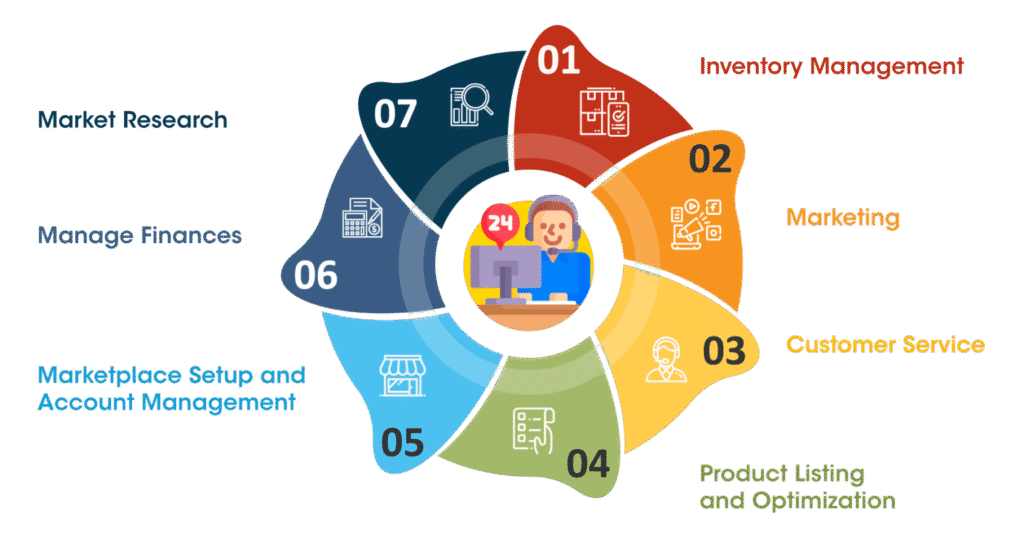
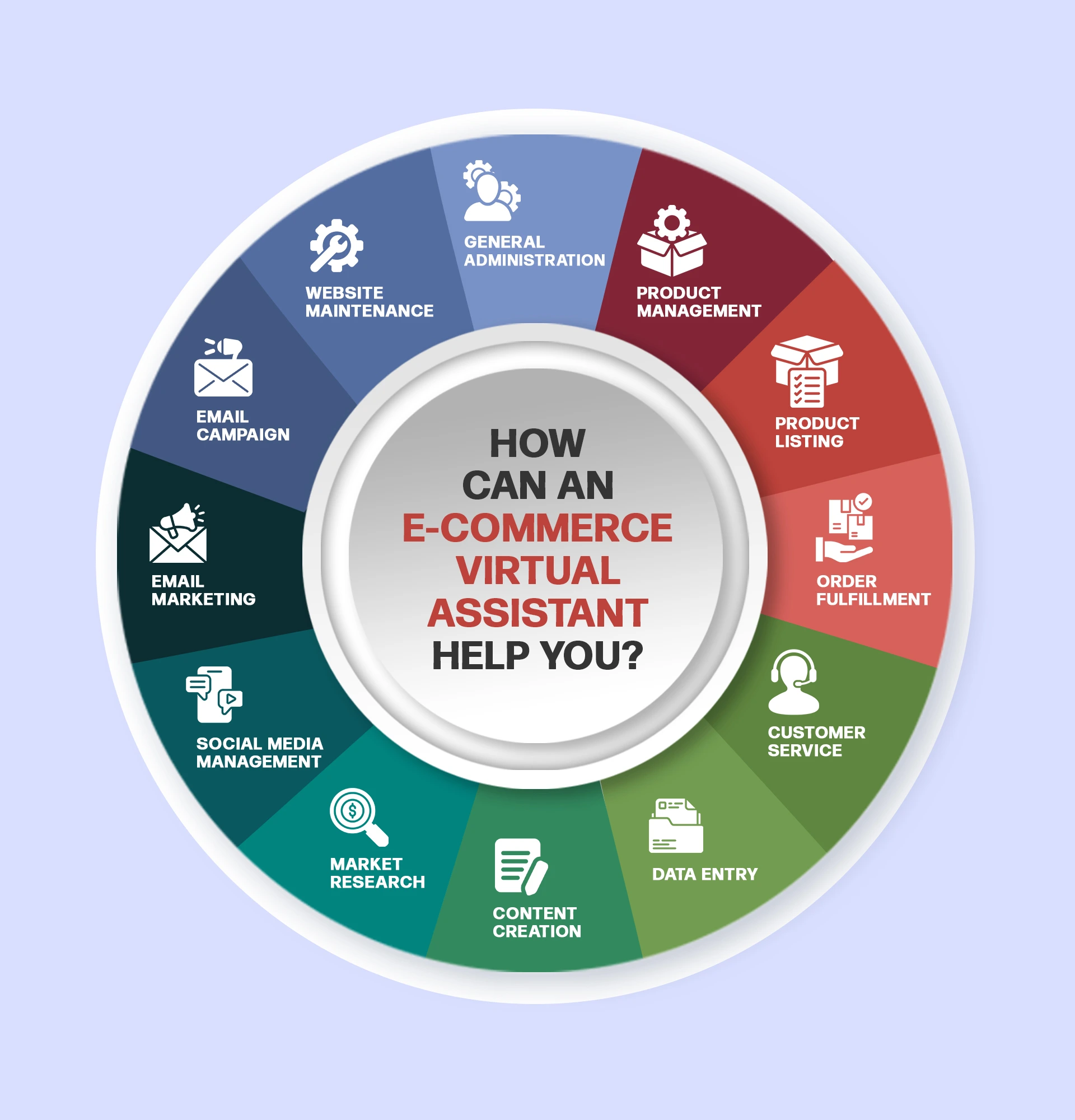
Ecommerce virtual assistant services cover many functions. Typical tasks include:
- Product listing and optimization: Create titles, descriptions, images, and tags.
- Inventory management: Track stock, update SKUs, and prevent oversells.
- Order processing: Confirm orders, prepare invoices, and manage returns.
- Customer service: Answer emails, chat, and social media inquiries.
- Content and SEO: Write product copy, blog posts, and implement keywords.
- Marketplace management: Handle Amazon, eBay, Etsy, and Shopify listings.
- Advertising support: Assist with ad setup, monitoring, and reporting.
- Data entry and reporting: Clean data and produce sales or KPI reports.
- Graphic edits: Resize images, simple design work, and A/B test images.
- Administrative tasks: Calendar, supplier communication, and document prep.
I once had a VA fix listing issues across 300 SKUs in two weeks. That kind of focused work is common with skilled ecommerce virtual assistant services.

How to choose the right ecommerce virtual assistant services
Choosing well saves time and money. Follow these steps:
- Define needs: List daily and weekly tasks you want to delegate.
- Decide skills: Identify required platforms and tools, like Shopify, Amazon, or Zapier.
- Set hours and budget: Choose part-time, full-time, or per-project rates.
- Review portfolios: Ask for samples of listings, templates, or reports.
- Test with trial tasks: Start with a small project to check fit and speed.
- Check communication: Ensure time zone overlap and clear response times.
- Ask about security: Confirm they use secure logins and can sign an NDA.
From my experience, a two-week paid trial reveals both skill and work style. That’s when you discover if the ecommerce virtual assistant services are a long-term match.

Pricing models and what to expect
Ecommerce virtual assistant services use several pricing models:
- Hourly: Pay for actual hours worked. Good for fluctuating needs.
- Monthly retainer: Fixed hours each month. Best for steady tasks.
- Project-based: One fee for defined projects like migrations or launches.
- Task bundles: Predefined packages for listing or support tasks.
Rates vary by skill and region. Expect lower hourly rates for general VA tasks and higher rates for specialist work like PPC or SEO. Transparency on scope prevents surprises.
Tools and integrations commonly used
A strong toolkit boosts the value of ecommerce virtual assistant services. Common tools include:
- Store platforms: Shopify, WooCommerce, BigCommerce.
- Marketplaces: Amazon Seller Central, eBay, Etsy.
- Customer support: Gorgias, Zendesk, Freshdesk.
- Marketing: Mailchimp, Klaviyo, Facebook Ads Manager.
- Productivity: Trello, Asana, ClickUp, Slack.
- Automation: Zapier, Make, native APIs.
- Design: Canva, Photoshop (basic), Lightroom for photos.
- Analytics: Google Analytics, Google Sheets, platform dashboards.
A skilled ecommerce virtual assistant services provider will know how to move data between tools. That saves hours and reduces errors.

Measuring ROI for ecommerce virtual assistant services
Measure impact with simple KPIs. Focus on these metrics:
- Time reclaimed: Hours saved per week and how they were used.
- Conversion rate: Improvements after listing or copy updates.
- Order accuracy: Reduction in fulfillment errors or returns.
- Customer satisfaction: Response times and rating scores.
- Revenue lift: Sales increase tied to marketing or listings.
- Cost per sale: Lowered by efficient ad or listing work.
When I tracked ROI, I compared time saved to revenue gained. Even small gains per SKU multiplied across the catalog.

Best practices for working with your ecommerce virtual assistant services
Clear processes make partnerships work. Apply these best practices:
- Create SOPs: Short, step-by-step guides for repeatable tasks.
- Use checklists: Prevent errors and keep quality steady.
- Communicate weekly: Quick syncs to review priorities and blockers.
- Share access safely: Use password managers and limited permissions.
- Start small: Build trust with small assignments before scaling.
- Give feedback: Be specific and kind to improve work quality.
- Track tasks: Use a shared board so nothing is lost.
I learned to document each process after a costly mistake. That documentation saved days later.
Common mistakes and how to avoid them
Mistakes happen. Here are the usual pitfalls and fixes:
- Overloading new hires: Start with focused tasks to build clarity.
- Vague instructions: Use examples and templates to guide work.
- Poor onboarding: Spend time training on tools and brand voice.
- Ignoring communication: Set regular check-ins and response windows.
- Skipping background checks: Verify experience and references.
One mistake I made was assuming standard product titles. After a week of inconsistent listings, we rewrote the SOPs. The fix was simple and fast.
Real-life examples and personal insights
I’ve hired three ecommerce virtual assistant services in the last five years. Here are lessons I learned:
- Hire for the hardest task first. If they can handle that, they can do easier tasks well.
- Invest in short training videos. It cuts miscommunication by half.
- Use KPIs from day one. It gives clear performance signals.
- Rotate tasks occasionally. It keeps work interesting and skills sharp.
One VA increased listing conversion by 18% after optimizing images and titles. That paid for the role within two months.
Scaling your business with ecommerce virtual assistant services
Scaling feels less scary with the right help. Steps to scale:
- Standardize work: Build SOPs for all repeatable tasks.
- Hire specialists: Add a listing expert, then a PPC helper, then support.
- Automate: Use Zapier or platform automations for routine updates.
- Monitor metrics: Watch sales, ad efficiency, and response times.
- Iterate: Test small changes and scale winners.
Ecommerce virtual assistant services let you test faster. You can expand product lines without overloading your schedule.
Frequently Asked Questions of ecommerce virtual assistant services
What tasks can ecommerce virtual assistant services handle?
Ecommerce virtual assistant services handle listing creation, inventory updates, customer support, content writing, and basic ad management. They support platforms like Shopify, Amazon, and Etsy.
How much do ecommerce virtual assistant services cost?
Costs vary by task complexity and region. Expect lower rates for admin tasks and higher rates for specialists like PPC or advanced SEO.
How do I ensure data security with a virtual assistant?
Use password managers, give limited access, and require NDA agreements. Regularly review permissions and change passwords when needed.
How quickly can a virtual assistant start adding value?
A well-trained assistant can add value within a few days on simple tasks and within weeks for complex workflows. Start with a short paid trial to speed assessment.
Can ecommerce virtual assistant services manage advertising campaigns?
Yes, many assistants handle ad setup, monitoring, and basic optimization. For complex campaigns, pair a VA with an experienced ad specialist for best results.
Conclusion
Ecommerce virtual assistant services are practical and powerful for store owners who want to scale. They free up time, reduce costs, and bring skills you may not have in-house. Start small, document processes, and measure results. If you’re ready to grow, try a short trial with clearly defined tasks and watch how ecommerce virtual assistant services change your day-to-day work. Consider hiring one this month, document two SOPs, and schedule a weekly check-in to begin.

Sofia Grant is a business efficiency expert with over a decade of experience in digital strategy and affiliate marketing. She helps entrepreneurs scale through automation, smart tools, and data-driven growth tactics. At TaskVive, Sofia focuses on turning complex systems into simple, actionable insights that drive real results.