⚠️ Disclosure: This post contains affiliate links. We may earn a commission at no extra cost to you.
⚠️ Disclosure: This post contains affiliate links. We may earn a commission at no extra cost to you.

Managing a virtual assistant doesn't require a rigid playbook, it requires the right framework for your specific situation. If you've ever struggled with unclear instructions, scattered communication, or tasks that keep falling through the cracks, you're not alone. Our research shows most business owners spend more time managing their VA than actually benefiting from the arrangement.
That's usually because they skip the foundation: clear systems, proper onboarding, and honest expectations.
As of 2026, aggregate data indicates that 67 percent of outsourced administrative roles now involve remote workers, making effective VA management a critical skill for any growing business. Whether you're hiring your first helper or optimising an existing relationship, understanding how your situation shapes your approach will save you hours and prevent costly mistakes. Let's walk through exactly how to set this up.
How to manage a virtual assistant depends on three key factors: whether they work freelance or through an agency, how many hours they commit weekly, and what type of tasks they handle. Start by mapping your needs against these variables before building any system. A 10-hour-per-week generalist needs different management than a full-time specialist handling complex operations.
Once you identify your scenario, the rest becomes straightforward.
Your VA management approach should shift based on your specific circumstances. One size never fits all when it comes to delegation.
When you hire through an agency, someone else handles recruitment, onboarding, and replacements. You mainly interface with an account manager. With a freelance VA, you own every part of the process, hiring, training, feedback, and problem-solving.
You invest more time upfront but retain tighter control and typically pay less. Learn about comparing different platforms to understand the trade-offs between models.

A ten-hour-per-week VA needs bite-sized task briefs and limited check-ins. They likely juggle multiple clients anyway. A full-time VA handling twenty to forty hours can absorb complex responsibilities and attend team meetings.
They become a genuine operational partner. But they need clearer boundaries, regular feedback sessions, and room to grow within the role.
Repeating administrative tasks, email triage, calendar management, data entry, are easier to delegate and measure. Specialist work like bookkeeping, social media management, or SEO demands more initial teaching, quality checks, and creative autonomy. Don't manage a specialist the same way you manage an administrator.
The output variability and skill level require a completely different management approach.
A solid start prevents most problems down the line. Here's how to onboard without chaos.
Write a clear job description including specific responsibilities, expected weekly hours, timezone overlap requirements, and the tools they'll use. Prepare access to your project management platform, shared drives, and communication channels. Set up a welcome document explaining your business simply, mission, key processes, and who they'll work with.
Skip this step and you'll spend weeks untangling confusion later.
Spend the first few days on orientation, not output. Walk them through your tools, introduce them to your team, and clarify how you prefer to communicate. Assign small, manageable tasks first.
Use a paid trial period of one to two weeks before committing long-term. This protects both sides from mismatched expectations.
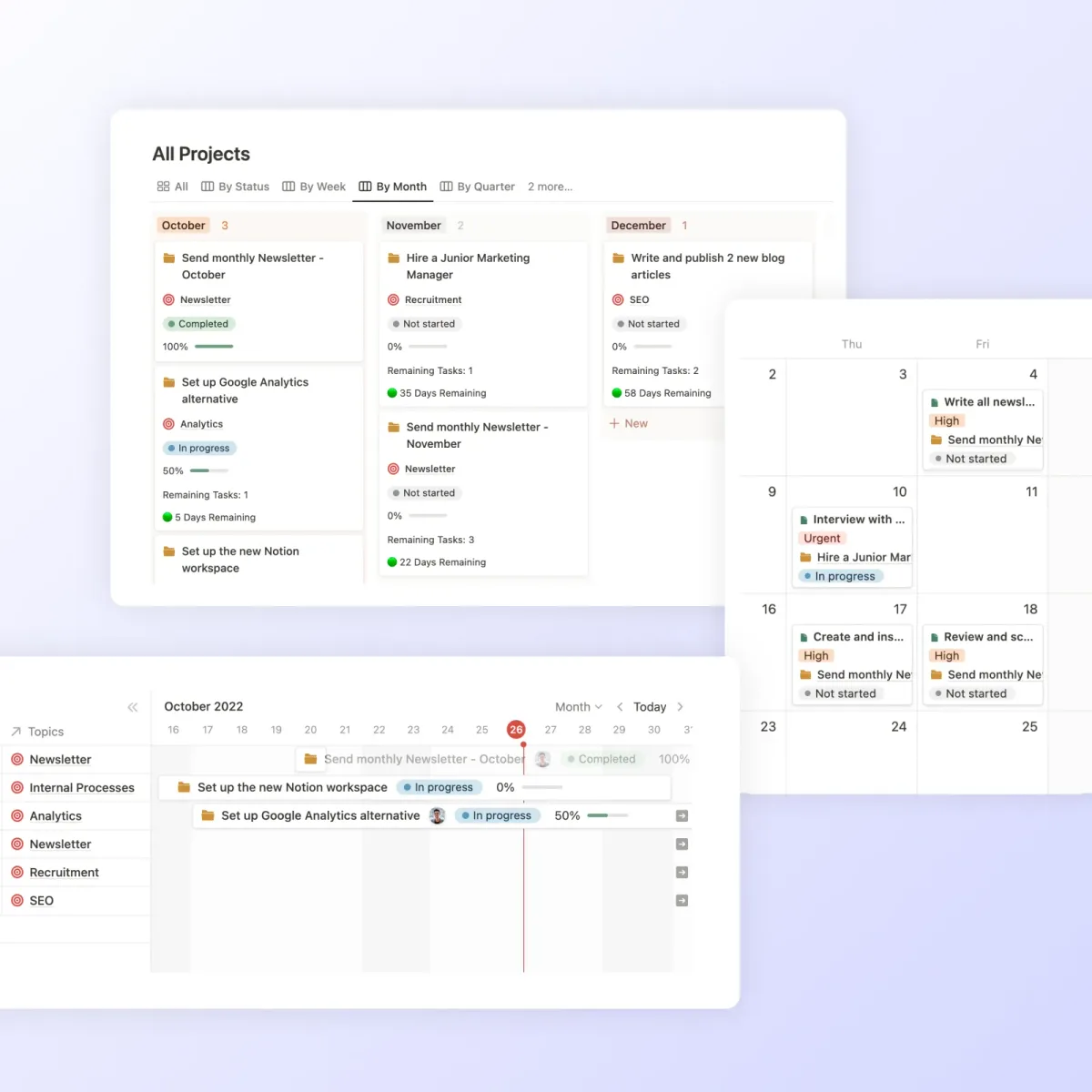
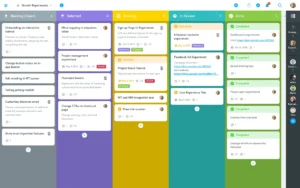
Build a shared knowledge base early. Document repetitive processes so your VA can reference them instead of asking the same question twice. Set up a centralised task board where everything lives.
Never let task requests scatter across Slack, email, and direct messages. Consider tools that simplify tracking and workflow management to keep everyone aligned.
Most VA relationships fail because of preventable errors, not skill gaps. Watch out for these pitfalls.
Vague instructions are the number one killer of productive delegations. Saying "handle my inbox" means nothing. Telling your VA to "sort inbox by URGENT, NEXT ACTIONS, and TODAY folders and flag anything about the Henderson account" means everything.
Specificity saves hours of back-and-forth.
Scope creep silently destroys the best arrangements. When new tasks pile on without adjusting hours or rate, resentment builds on both sides. Treat scope changes as formal conversations, not casual requests.
Micromanaging every detail kills autonomy. If you hover constantly, your VA stops thinking independently. Trust the system you built together.
Find guidance on scaling your operations effectively without constant oversight.
Under-investing in onboarding costs more in the long run. Skipping proper training seems fast but creates hours of rework. Letting knowledge stay trapped in your head means your VA can't function without constant hand-holding. Document once and reuse forever.
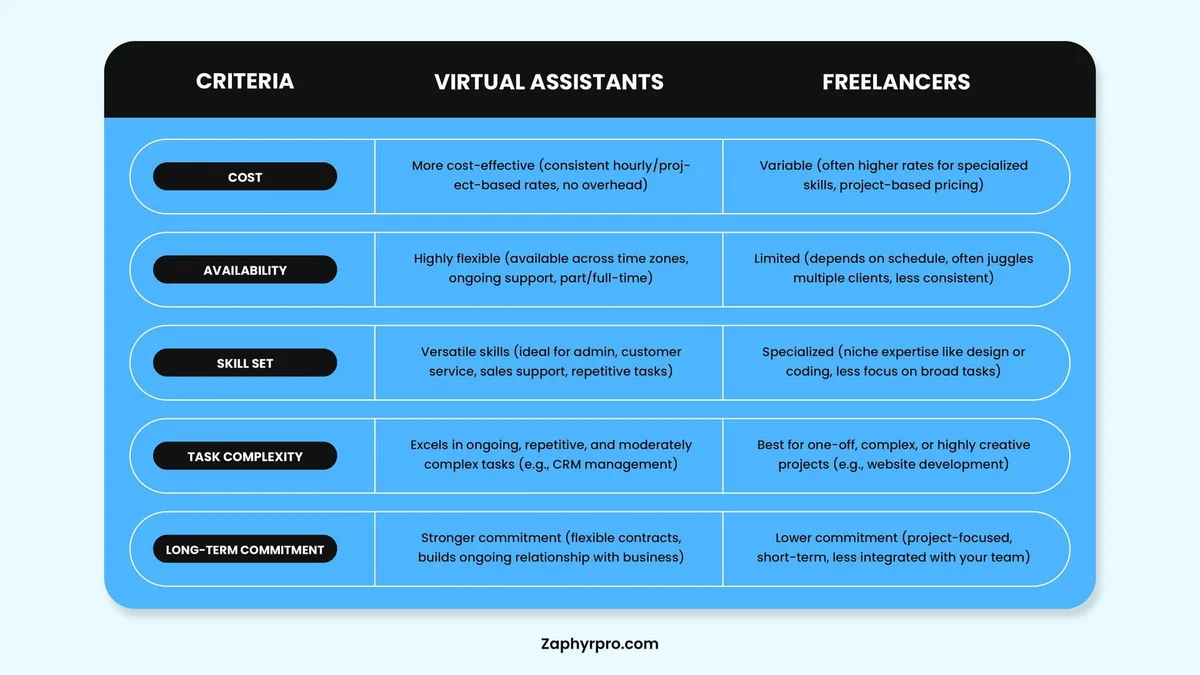
Image source: Bing (Web (fair-use with source credit))
Managing a VA isn't your only option. Depending on your situation, other approaches might serve you better.
| Option | Best For | Key Trade-off |
|---|---|---|
| Freelance VA | Flexible, cost-effective support across varied tasks | You handle all management and recruitment |
| Agency-backed VA | Hands-off staffing with built-in replacements | Higher cost and less direct control |
| In-house employee | Deep institutional knowledge and tight collaboration | Full salary, benefits, and legal obligations |
| Automation or AI tools | Repetitive, rule-based workflows | Limited creativity and adaptability |
| Intern or junior hire | Learning-oriented roles with growth potential | Slower output and more training required |
For pure routine tasks, automation may replace the need for a human entirely. For creative or strategic work, a human VA remains irreplaceable. Explore how different specialisations match various business needs before committing.
Consider your actual bottleneck. Is it volume of repetitive work or depth of judgement? If it's volume, automation or a generalist VA solves it.
If it's judgement, a specialist or employee makes more sense. Many successful businesses layer multiple options together, automation for simple tasks, a part-time VA for medium complexity, and a specialist contractor for high-value work.
Building a lasting VA relationship requires habits most business owners skip. After studying hundreds of delegations, these patterns separate thriving partnerships from abandoned ones.
Treat your VA as a partner, not just help. People who feel trusted perform better and stay longer. Give them ownership of outcomes, not just tasks.
Run a consistent rhythm. A weekly sync for review and planning, plus async updates for day-to-day progress, keeps everyone aligned. Consistency beats intensity every time.
Invest in SOPs. Document processes once and reuse forever. The best VAs don't need reminders, they need references they can find without asking you.
Review quarterly. Even great working relationships drift. A structured check-in on goals, frustrations, and adjustments prevents small issues from becoming dealbreakers.
Protect your own time. Delegate tasks that drain you, but keep revenue-critical and relationship-heavy work in your hands. Discover strategies for maximising your team's output without burning out.
Most business owners begin with five to ten hours weekly during a trial period. This reveals whether the working relationship clicks before you commit to more.
Use a shared task board like Notion, Trello, or Asana. Require status updates rather than just completion. Time trackers help too, especially for hourly arrangements.
Hourly billing charges for time spent. A retainer pays a fixed amount for a set scope or block of hours each month. Retainers suit ongoing, predictable work; hourly fits variable tasks.
Yes, and it's one of the biggest advantages. Just ensure enough overlap for meetings and urgent issues, then embrace asynchronous communication for everything else.
Address them quickly and calmly. Ask what went wrong, fix the process if possible, and document the correction. Blame rarely improves performance.
The best VA management isn't about controlling a person, it's about building a system anyone can step into. Start by mapping your needs against the variables we covered: freelance or agency, part-time or full-time, admin or specialist. Then lay down clear onboarding, centralised task management, and documented processes.
Check in regularly, avoid the common mistakes, and keep your options open. When done right, a virtual assistant stops being a hired-help arrangement and becomes genuine operational leverage. You free yourself to focus on what actually moves your business forward.
For deeper guidance on structuring these systems, explore comprehensive resources on remote work strategies tailored to your scale. Remember, the goal isn't to find someone who does exactly what you'd do, it's to create a framework where they can do their best work independently.

















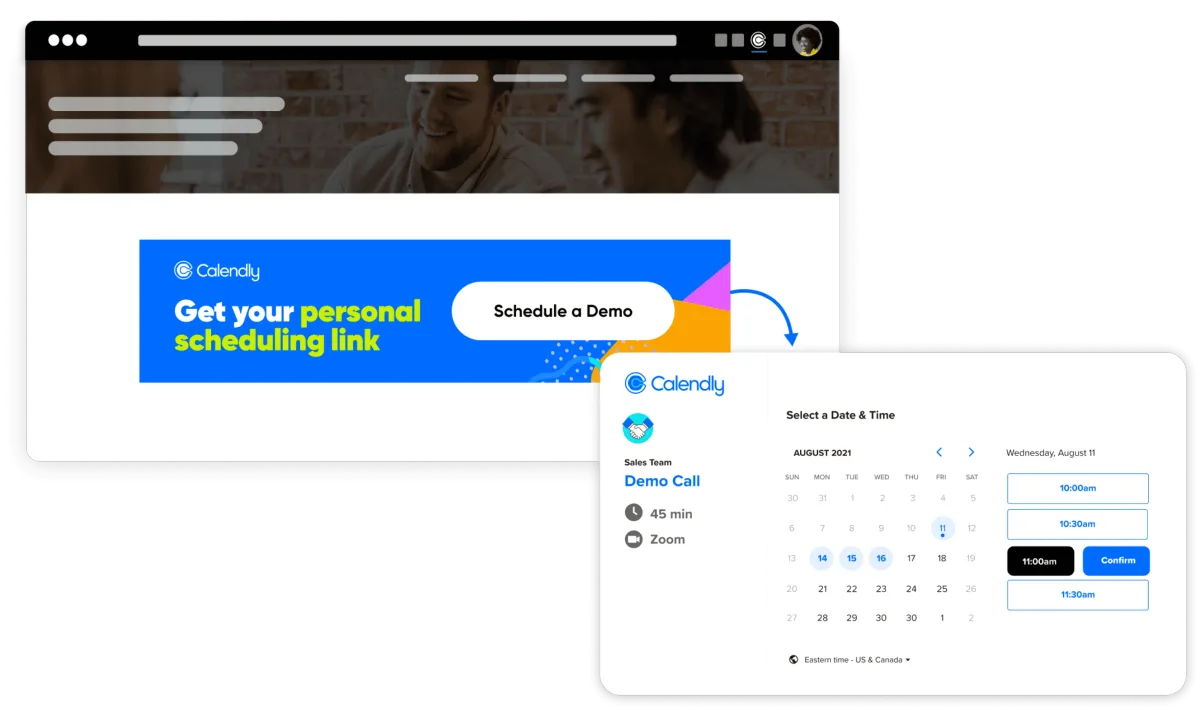
You’re staring at a Calendly page that’s filling with booking requests faster than you can reply. A virtual assistant for Calendly can take that load, but only…
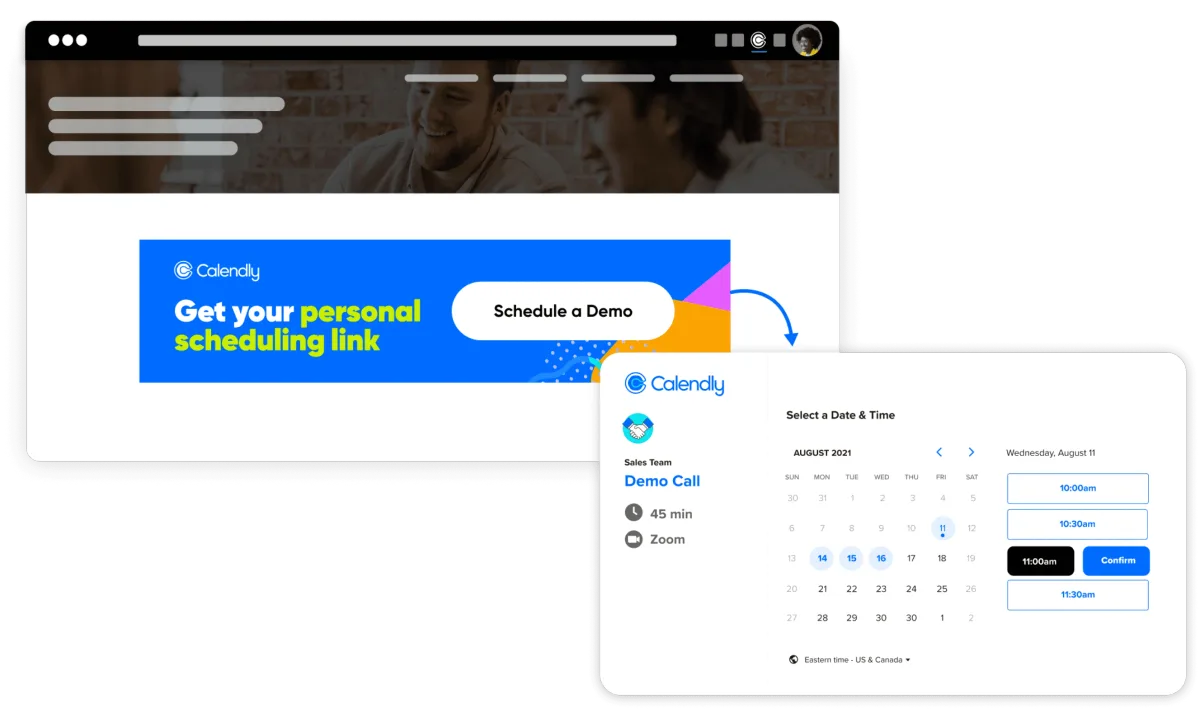
You’re drowning in meeting requests and your calendar looks like a war zone. Virtual assistant Calendly management is the fix that lets a trusted helper handle…
You’ve got too many meetings and not enough hours. A virtual assistant for Outlook Calendar can fix that, but only if you pick the right type. We’ll walk…