⚠️ Disclosure: This post contains affiliate links. We may earn a commission at no extra cost to you.
⚠️ Disclosure: This post contains affiliate links. We may earn a commission at no extra cost to you.

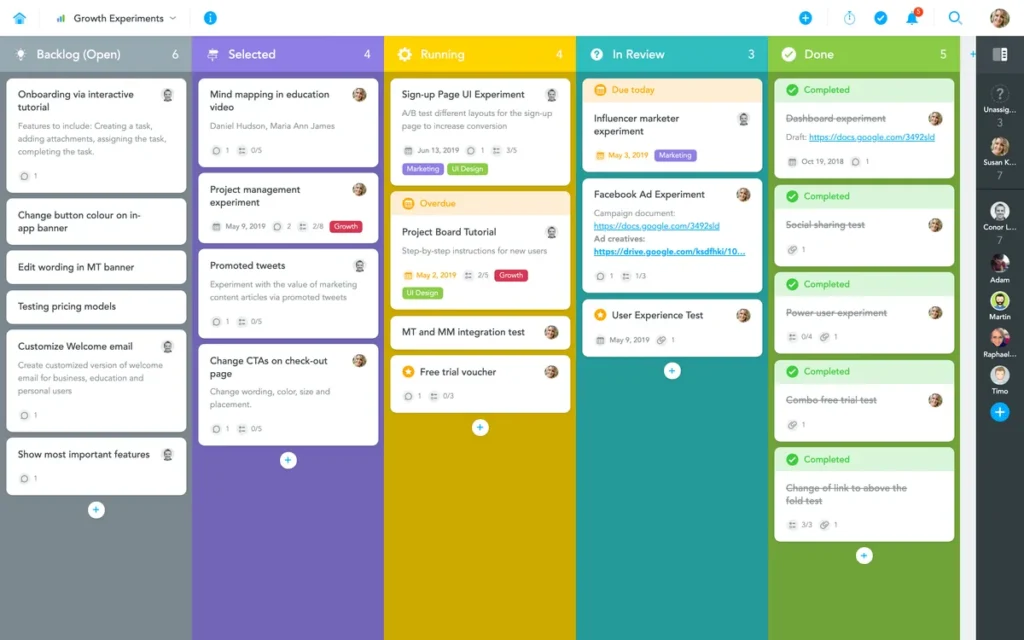
The problem most founders face isn't hiring the wrong person, it's giving them work that lives nowhere concrete. If you've ever wondered how to manage virtual assistant tasks without things falling apart, you're not alone. Tasks get tossed into Slack DMs, buried under email threads, or whispered over Zoom calls.
A week later, nothing's done, everyone's confused, and you're picking up the slack again.
Per SBA research on small business outsourcing practices, companies that implement structured delegation systems see nearly a 40 percent reduction in follow-up meetings and rework cycles. The difference almost always comes down to one thing: a clear system. This guide walks through exactly how to build that system for your situation.
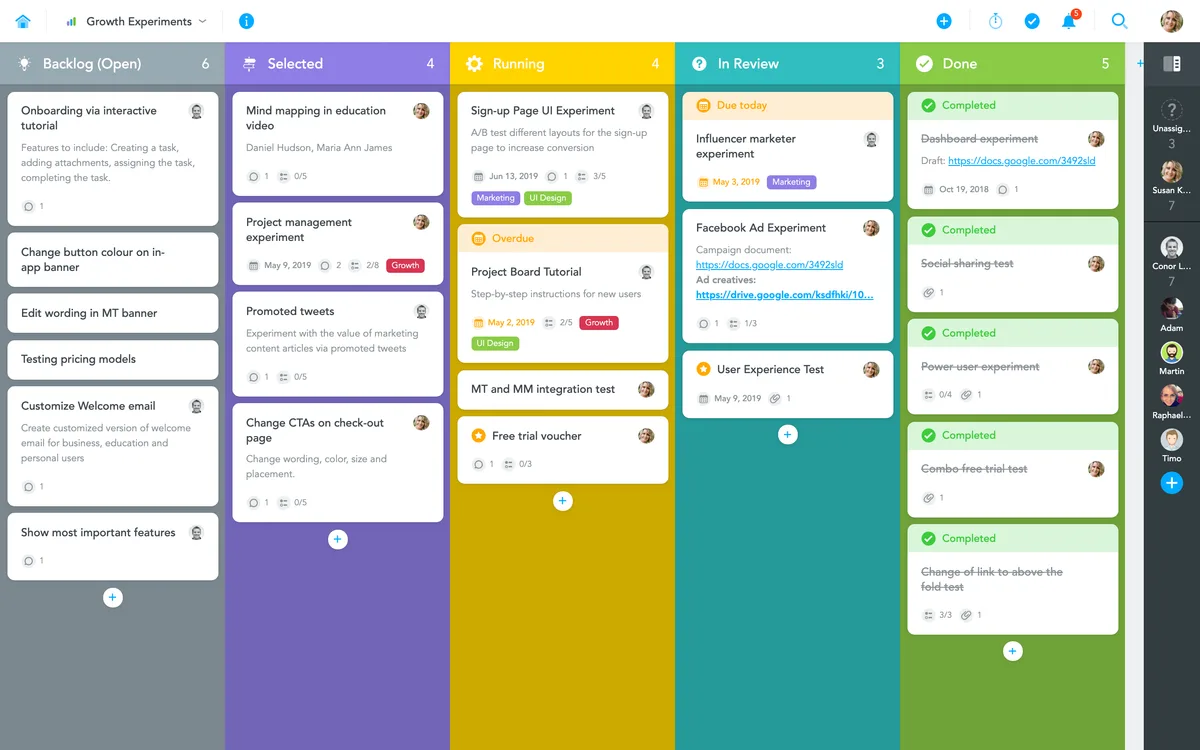
Image source: Web (Bing) / timecamp.com (Web image (fair-use with source credit))
To manage VA tasks well, use one central workspace. Write clear briefs for every assignment. Hold regular check-ins to track progress.
Pick tools like Asana or ClickUp early. Build SOPs for work that repeats often. Review weekly to catch issues fast.
The problem most founders face isn't hiring the wrong person. It's giving them work that lives nowhere concrete. Tasks get tossed into Slack DMs, buried under email threads, or whispered over Zoom calls.
A week later, nothing's done. Everyone's confused. You end up picking up the slack again.
This pattern shows up in three main forms. First, the DM graveyard where conversations about task status disappear into chat history. Second, the email black hole where attachments and instructions get lost in crowded inboxes.
Third, the mental load trap where you assume the VA "should know" what to do because you explained it once in passing.
Aggregate feedback from remote work studies confirms this is widespread. The Stanford University research on telecommuting productivity notes that communication breakdowns account for roughly half of all delegation failures in distributed teams.
The good news is fixable. Once you establish a single source of truth and write work down instead of talking it, most friction points disappear. The rest comes down to consistent process.
We'll cover that next.
Not every task deserves a virtual assistant. The first fork in the road is figuring out which work you can safely hand off and which ones stay yours.
Ask yourself these questions about each task before delegating:
The easiest way to sort tasks quickly is by category. Administrative work like calendar management, email triage, and data entry is ideal for entry-level VAs. Operational tasks like order processing, inventory updates, and customer support routing fall into the sweet spot for experienced hires.
Creative support work such as research, drafting, and editing benefits from VAs who understand your brand voice.
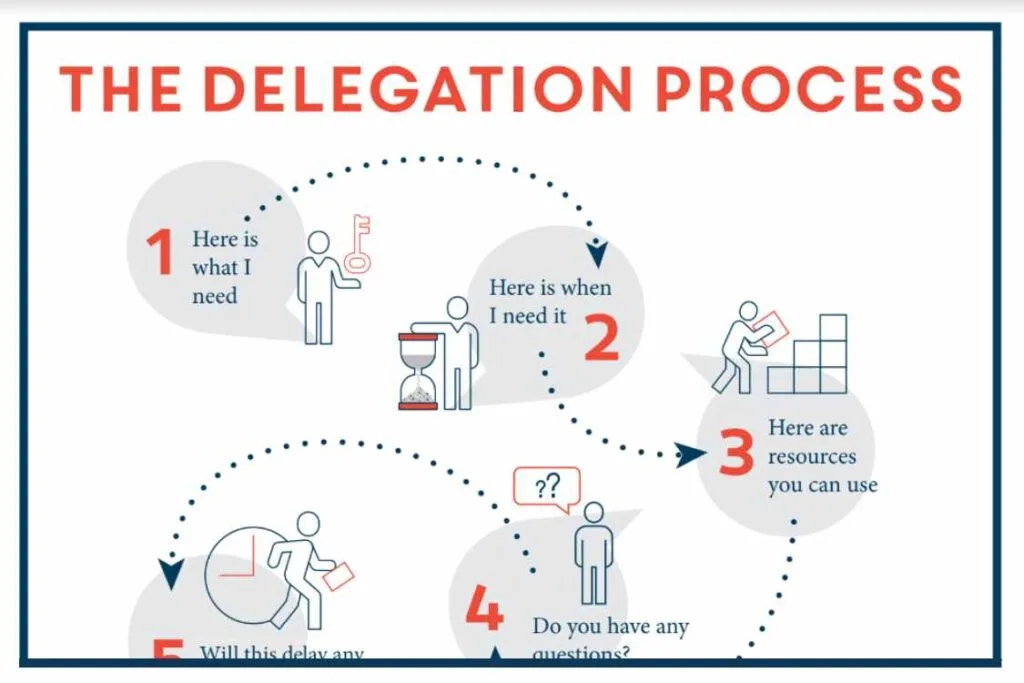
Image source: Bing (Web (fair-use with source credit))
Here's a quick filter to help you decide:
| Task Type | Good for VA? | Notes |
|---|---|---|
| Calendar scheduling | Yes | Clear rules, low risk |
| Email management | Yes | Define priority signals first |
| Social media posting | Yes | Provide content calendar and tone guide |
| Customer refund decisions | No | Keep policy-bound actions internal |
| Financial reporting | No | Sensitive data, needs oversight |
| Blog research and drafts | Yes | Give clear outlines and sources |
| Hiring interviews | Sometimes | Depends on role sensitivity |
| Vendor negotiations | Sometimes | May need founder presence early on |
If you want to explore remote virtual assistant career paths or high-paying remote opportunities, understanding what VAs typically handle helps you set realistic expectations when you hire one yourself.
This is the system most people are searching for. A repeatable workflow that keeps tasks moving without constant oversight.
Here's the end-to-end process:
Step 1: Define which tasks are ready to delegate. Use the filter from the previous section. Don't start with your whole workload. Start with five tasks you know will free up meaningful time.
Step 2: Write clear SOPs and task briefs for recurring work. Every task that repeats more than twice gets a standard operating procedure. One page. Screenshots if helpful.
Link it in the task card itself.
Step 3: Set up a central task management system. Pick one tool. Move everything there. If a task isn't in the system, it doesn't exist.
This is non-negotiable for consistent results.
Step 4: Onboard the VA with a checklist and guided first-week tasks. Send them into the deep end and watch them drown, or give them a clear first-week path. The difference in outcomes is enormous.
Step 5: Assign tasks with context, goal, deadline, resources, success criteria. Never send a one-line instruction. Tell them why the task matters, what a finished version looks like, and where to find supporting materials.
Step 6: Use a consistent check-in rhythm. Daily async updates work for most setups. Weekly live syncs are valuable for complex projects. Keep meetings short and agenda-driven.
Step 7: Provide feedback loops. Praise what works. Correct what doesn't. Document corrections so the same mistake doesn't happen again.
Step 8: Audit the workflow monthly. Drop what isn't working. Add templates for new recurring work. Adjust cadence based on what the data shows.
Many founders skip straight to hiring without building this foundation. If you're looking to boost productivity as an entrepreneur, investing two weeks in workflow setup pays back ten times over in reduced management overhead.
A task brief is the single most important artifact in VA management. A great brief prevents three-quarters of revisions. Here's what every brief needs:
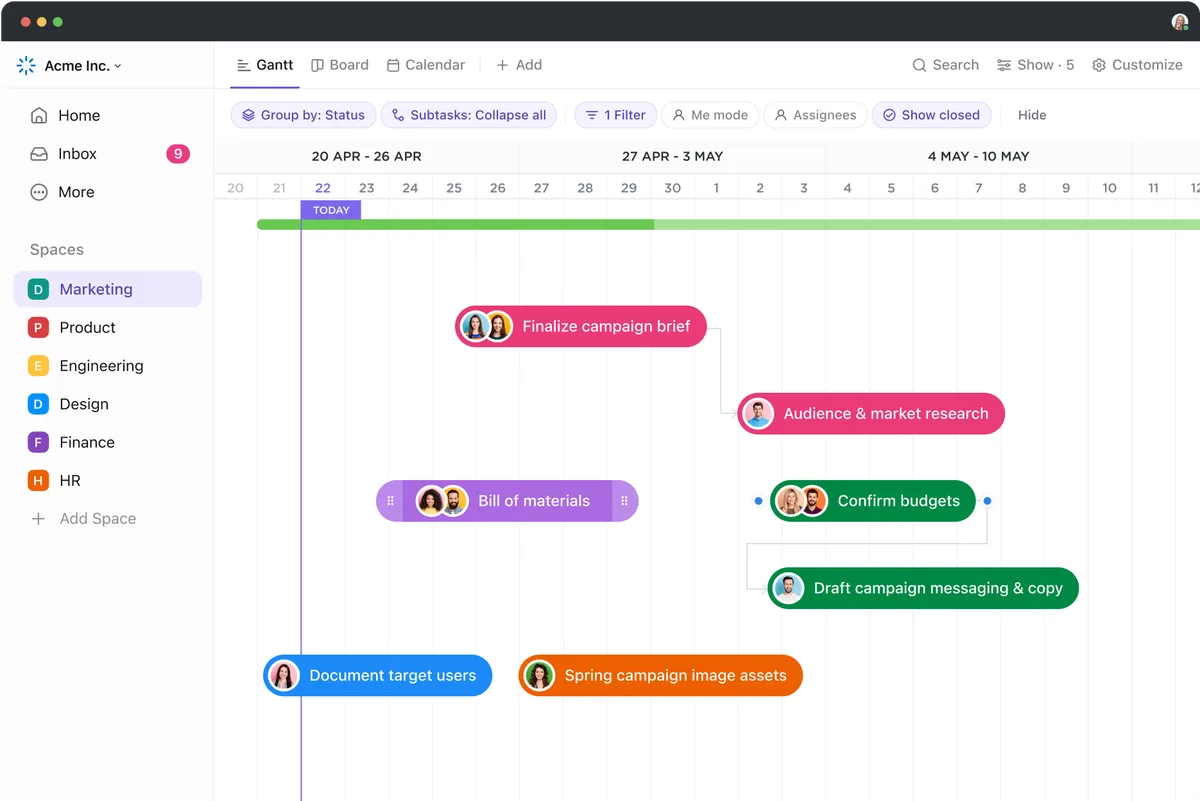
Image source: Web (Bing) / clickup.com (Web image (fair-use with source credit))
Before and after example. Weak brief: Handle my inbox. Strong brief: Review my Gmail from 9 AM to noon daily.
Flag anything marked Urgent or containing the words refund, cancel, or legal. Draft replies for Urgent items using the templates in the shared folder. Leave non-Urgent items marked for review and summarize top three in a daily note by 12:30 PM.
The second brief takes forty seconds longer to write. It saves roughly forty minutes of back-and-forth per week.
Check-in frequency depends on your VA's experience level and the complexity of assigned work. New VAs benefit from daily five-minute check-ins for the first two weeks. Experienced VAs typically need only a brief weekly sync plus async updates through the task tool.
The trick is building visibility into progress without hovering. Use your project management tool's comment threads for status updates. Reserve live conversations for blocking issues or strategic adjustments.
Track completion rates rather than micromanaging hourly activity.
Time tracking tools like those reviewed in our time tracking tools guide can help both parties understand where hours go.
Different businesses need different systems. A solo founder managing one VA doesn't need the same stack as a marketing team coordinating three freelancers across time zones.
Here's how the major options compare for VA task management:
| Tool | Best For | Learning Curve | Price Range | Key Strength |
|---|---|---|---|---|
| Asana | Structured workflows | Low | Free to $15/user/mo | Clear task hierarchy |
| ClickUp | All-in-one flexibility | Medium | Free to $12/user/mo | Custom views and automation |
| Notion | Knowledge-heavy teams | Medium | Free to $20/user/mo | Docs meet tasks in one place |
| Trello | Simple visual boards | Very low | Free to $10/user/mo | Easy Kanban style |
| Monday.com | Visual dashboards | Low | Free to $19/user/mo | Customizable columns and automations |
Our research across multiple remote work platforms shows Asana and ClickUp dominate among small business owners delegating to VAs as of 2026. Notion appeals to knowledge-first teams who want briefs and tasks in the same space.
The right choice comes down to three factors. How many people share the workspace? How complex are your task dependencies?
Do you need heavy documentation alongside task tracking? Answer honestly and pick the simplest tool that covers your needs. Overengineering your setup is a common trap that slows adoption.
If you're evaluating premium VA services like Time Etc versus Belay, those agencies often include their own management platforms, which reduces your tool decision to a single choice.
Even with a solid system in place, certain patterns consistently derail VA relationships. Recognizing these early saves months of frustration.
Here are the seven most common mistakes:
Learning the top skills for making money online can also help you evaluate whether a VA has the capabilities you actually need.
The pattern behind most failures is the same. Founders skip the system-building phase and jump straight to delegation. Without structure, even excellent VAs struggle to deliver consistently.
With structure, average performers often exceed expectations.
Sometimes the real question isn't how to manage tasks better. It's whether a traditional VA hire is even the right move for your situation.
Three paths exist. Each has different trade-offs around cost, control, speed, and quality.
Direct VA hire through platforms like Upwork or Fiverr. You find, vet, and manage the person yourself. Best when you want full control over training and processes. Lower cost but higher time investment in hiring and management.
VA agencies like Belay or Time Etc. They handle screening, management, and replacements. Best when you value speed and reliability over direct control. Higher cost per hour but less operational overhead for you.
Automation and AI tools. Best for repetitive, rule-based tasks that don't require human judgment. Can replace certain VA functions entirely while costing a fraction of human labor.
Image source: Web (Bing) / virtualstaff.ph (Web image (fair-use with source credit))
Here's a decision guide based on your situation:
| Your Situation | Recommended Path | Why |
|---|---|---|
| One VA for light admin | Direct hire | Lowest cost, enough work to justify |
| Multiple specialized roles | Agency | Faster matching, backup coverage |
| Budget under $500/month | Direct hire or automation | Agency minimums may exceed budget |
| Need launch support fast | Agency | Pre-screened talent available immediately |
| Tasks are highly repetitive | Automation first | Cheaper and more consistent long-term |
| Complex creative work needed | Direct hire | Full control over quality and iteration |
Before committing to a role, consider free skill development courses to clarify what abilities you actually need. Understanding how to get clients as a virtual assistant from the other side also helps you evaluate candidates more effectively when you're the one hiring.
Understanding pricing helps you set realistic expectations before hiring. VA costs vary significantly based on location, experience level, and engagement model.
Here's what most founders pay as of 2026:
| VA Type | Hourly Rate Range | Best For |
|---|---|---|
| Entry-level offshore VA | $5–$15/hour | Simple admin, data entry, scheduling |
| Mid-level specialized VA | $20–$40/hour | Marketing support, bookkeeping, research |
| Senior executive VA | $40–$75/hour | Strategic tasks, communications, operations |
| Premium agency VA | $30–$100/hour | Managed service, replacement guarantee |
Monthly cost depends on hours needed. A part-time VA working twenty hours weekly at mid-level rates runs roughly $1,600 monthly. Full-time engagement at senior rates can reach $5,000 or more.
Beyond hourly wages, factor in tool subscriptions. Project management platforms typically cost $10 to $20 per user per month. Time tracking tools may add another $5 to $15.
Budget an additional $50 to $100 monthly for your tech stack.
Many beginners underestimate these overhead costs. If you're researching Alison virtual assistant courses, understanding that training investment alongside ongoing costs gives you a complete picture.
Agencies charge premium rates but include vetting, management, and backup coverage. Direct hires save money but require more hands-on oversight. The right choice depends on whether you value time savings or cost efficiency more.
Managing external contractors requires attention to legal and security considerations. Skipping these steps exposes your business to real risk.
Start with proper contractor classification. The IRS distinguishes independent contractors from employees based on behavioral control, financial control, and relationship type. Misclassification can trigger penalties, back taxes, and benefits obligations.
Most VAs qualify as 1099 independent contractors when they control how work gets done.
Non-disclosure agreements protect sensitive information. Require every VA to sign an NDA before accessing company data. Cover client lists, financial records, strategic plans, and proprietary processes.
Limit digital access using the principle of least privilege. Give logins only to systems the VA actually needs. Never share admin-level credentials.
Use password managers with limited sharing features instead of forwarding passwords directly.
Data privacy compliance matters if your VA handles customer information. GDPR applies to EU residents' data regardless of where your business operates. CCPA covers California residents.
Ensure your VA understands data handling requirements for applicable regulations.
Copyright ownership should be addressed in your contract. Work created by contractors belongs to the employer by default in many jurisdictions, but explicit language prevents disputes later.
The SBA provides guidance on outsourcing best practices including contractor management tips. Review their recommendations alongside your legal counsel's advice specific to your situation.
If you're exploring Poshmark virtual assistant strategies or medical virtual assistant workflows, those industries carry additional compliance considerations beyond standard contractor agreements.
Most founders find value starting with five to ten hours weekly. This range lets you test the relationship without overscheduling. Once you confirm fit, you can scale up to twenty or more hours.
New VAs typically need two to four weeks to reach full productivity. The first week focuses on tools and SOPs. Weeks two and three involve guided practice.
By week four, most VAs handle tasks independently.
Fair rates depend on location and expertise. Entry-level offshore VAs charge $5 to $15 hourly. Mid-level specialists run $20 to $40 hourly.
Senior VAs or agency placements cost $40 to $100 hourly.
Build in two to four hours of overlap whenever possible. Use async communication as your default. Record video updates with Loom instead of scheduling live calls.
Set clear expectations about response windows upfront.
Flag three warning signs: consistent missed deadlines despite clear briefs, repeated same mistakes after correction, or misalignment on communication style. Address these within two weeks. If patterns persist, part ways early rather than burning months rebuilding trust.
Use NDAs, limit system access to only what's necessary, and avoid sharing master passwords. Store sensitive files in secure cloud folders with view-only permissions where possible.







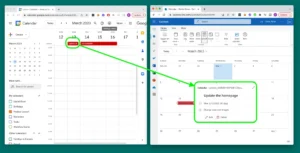

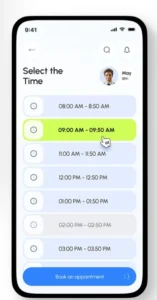
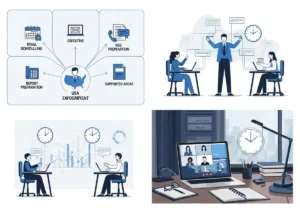
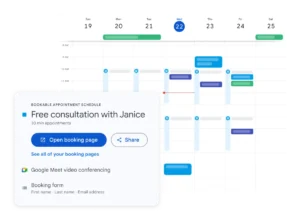



You’re staring at two options that look almost identical on your screen. A virtual assistant to manage calendar can be a human contractor or an AI scheduling…

A virtual assistant to organize calendar can be the difference between a calm week and a chaotic one. The wrong choice leaves you shouting at a speaker that…

You’re drowning in appointment requests and a virtual assistant to manage appointments sounds like the fix. But the options range from a human freelancer to an…