⚠️ Disclosure: This post contains affiliate links. We may earn a commission at no extra cost to you.
⚠️ Disclosure: This post contains affiliate links. We may earn a commission at no extra cost to you.

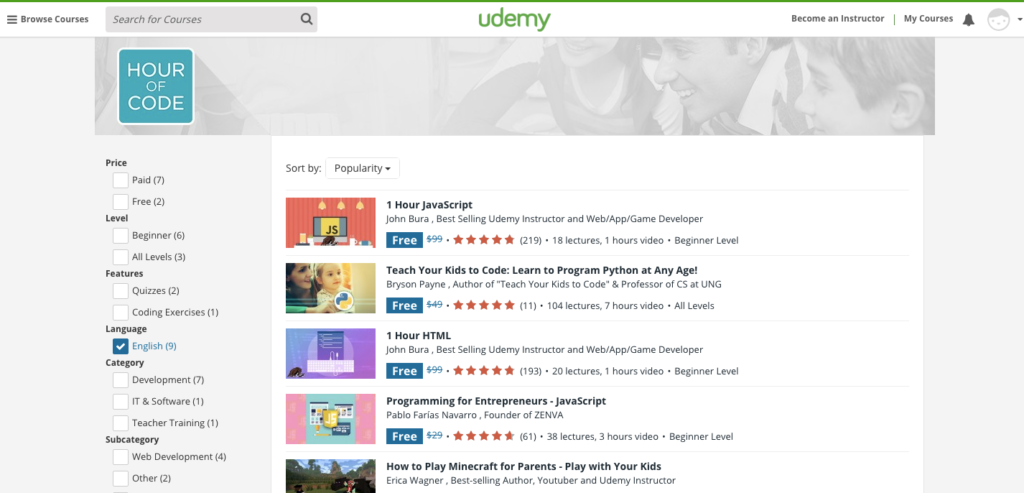
Online learning has become a standard way to build job-ready skills without enrolling in a full degree program. Among the biggest platforms, Udemy offers thousands of courses on everything from Python programming to public speaking. But two questions consistently trip up learners: When should I buy to get the best price? and How do I list these courses on a resume so employers take them seriously?
This guide covers both sides — the buying strategy that saves you 80–90% off sticker prices and the resume-writing tactics that turn a Udemy certificate into a genuine hiring advantage.
Udemy runs sales almost year-round, but the discounts are not random. Understanding the calendar lets you plan purchases and avoid paying full price. For more on this, see our guide on udemy courses best times to buy.
| Sale Event | Typical Timing | Discount Depth |
|---|---|---|
| Black Friday / Cyber Monday | Late November | 80–90% off — most courses drop to $9.99–$14.99 |
| New Year’s Sale | First two weeks of January | 75–85% off |
| Spring Sale | March–April | 70–85% off |
| Mid-Year Sale | June–July | 70–85% off |
| Back-to-School Sale | August–September | 70–80% off |
| End-of-Year Sale | December (outside Black Friday) | 70–80% off |
During these windows, a course normally priced at $99.99 routinely sells for $12.99. Never pay the “original” price — it is almost always inflated to make the sale price look better.
Udemy runs a site-wide sale roughly once a month, sometimes more often. Flash sales can appear without notice, typically lasting 2–3 days. The key insight: if a course you want is not on sale today, wait two to three weeks. It almost certainly will be.
Yes, free access exists — but not through shady crack sites. Use these safe methods:
Common mistake: Creating multiple accounts to claim free coupons. Udemy’s terms prohibit this, and you risk losing access to your purchased courses. Stick to one account.
Yes — but the value depends entirely on how and where you list them. A poorly placed “Udemy Certificate” can look weak, while a well-written entry can demonstrate initiative.
Option A: Dedicated “Professional Development” or “Relevant Courses” section
PROFESSIONAL DEVELOPMENT
- Advanced Python for Data Analysis (Udemy, 2026) – 30-hour certificate covering pandas, NumPy, and data visualization.
- Google Sheets Automation (Udemy, 2025) – Built a budget tracker and invoice generator using macros and Google Apps Script.
Option B: Under the “Skills” section (sparingly)
Skills
- Python, SQL, Tableau – Udemy certificate in data analytics (30 hours, 2026)
Option C: Within a “Projects” section – describe the final project you built using the course.
Projects
- Customer Churn Dashboard – Built with Python and Power BI; created after completing Udemy’s "Data Analytics Bootcamp" (2026).
Perceptions differ. Recruiters at fast-growing tech startups often view self-paced courses as a strong signal of drive. More traditional companies (banks, law firms) prefer accredited training. The solution: always list the tangible outcome — the project, the tool you learned, the hours invested — not just the certificate.
If you want to supplement your Udemy learning with structured skill-building, consider browsing curated lists of certificate-based courses that are widely recognized. For example, you can explore a collection of structured skill-building courses that include both Udemy and other platforms.
Not every $12.99 course belongs on a resume. Use these filters:
Buying a course is only the first step. To get the resume payoff, do the following:
If you are targeting high-demand online skills, knowing which fields are growing helps you prioritize courses. The high-demand online skills list can guide your selection — focus on those that align with your career goals.
Yes, if the course teaches a new skill not covered in your degree. For example, a marketing graduate who takes a Udemy course in SQL for marketers shows they can handle data. A computer science graduate who takes a course in UI/UX design rounds out their skill set. The key is relevance and specificity.
| Platform | Certificate Recognition | Typical Price Range | Best Use Case |
|---|---|---|---|
| Udemy | Low to moderate (depends on course) | $10–$20 per course (sale) | Wide breadth, low-cost exploration |
| Coursera (accredited partner) | Moderate to high (university-backed) | $40–$80 per month (subscription) | Deep learning with graded assignments |
| LinkedIn Learning | Moderate (LinkedIn profile integration) | $30/month or included with Premium | Quick, bite-sized professional skills |
| edX / FutureLearn | Moderate to high (verified certificates) | Varies per course | Academic rigor from top universities |
Udemy excels for affordable, self-paced exploration across thousands of topics. If you need a credential that holds more weight with traditional employers, consider pairing a Udemy course with a portfolio project and then pursuing a verified certificate from a university partner.
Can I add Udemy courses to my LinkedIn profile?
Yes. Go to the “Licenses & Certifications” section on LinkedIn. Enter the course title, issuing organization (Udemy), and the certificate URL. Do not add Udemy courses under the “Education” section.
Do Udemy certificates expire?
No. Udemy certificates do not have an expiration date. However, for fast-changing fields like web development or digital marketing, the content may become outdated in 2–3 years.
How many Udemy courses should I list on a resume?
No more than 2–3, and only those directly relevant to the job. A long list dilutes the impact.
Can I get a refund if I buy a course at full price and it goes on sale the next week?
Yes. Udemy offers a 30-day money-back guarantee. If you paid full price and a sale starts within 30 days, request a refund and repurchase at the lower price.
Is it worth buying a Udemy course without a sale?
Almost never. Wait for a sale, which comes within a few weeks. The exception is a niche course with no alternatives — but even then, check if the instructor offers a coupon.
Udemy courses are a practical, low-cost way to acquire in-demand skills — but the return on your investment depends on two things: buying smart and listing smart. Target the major sales (expect to pay $10–$15 per course), complete every lecture, and showcase what you built, not just the certificate.
When you list a Udemy course on your resume, treat it as a professional development accomplishment. Pair it with a portfolio piece, write a clear description of the skills you gained, and keep it relevant to the role you want.
Start by exploring the concept of skills development to understand how short courses fit into your overall career growth. Then choose one high-value Udemy course that solves a skill gap you have today — and wait for the next sale before hitting “buy.” Your wallet and your resume will thank you.
For further reading on building a career-focused learning habit, see our guide on essential assistant competencies, which uses similar course-based skill-building strategies for hiring virtual support. that falls outside your field — a Udemy course in time management systems or project coordination software bridges the gap quickly. The hiring manager sees you proactively solved a weakness before it became a problem.
Instead of listing individual Udemy courses one by one, group them under a single competency header when they form a logical sequence.
Example — Data Analytics Stack
DATA ANALYSIS PROFICIENCY
Completed a four-course sequence on Udemy covering:
- SQL for Data Analysis (12 hours)
- Python with pandas and NumPy (20 hours)
- Tableau Desktop Specialist prep (8 hours)
- Statistics for Data Science (15 hours)
This approach shows depth rather than breadth. A recruiter scanning for “Tableau” and “Python” in the same resume sees a candidate with a focused skill stack, not someone sampling random topics.
There are situations where you should leave Udemy off entirely:
In those cases, invest the learning time into a project instead. Build something you can show, then mention the project — not the course.
Udemy works best as one layer in a larger learning plan. Pair it with free resources like YouTube tutorials, documentation reading, and practice projects. If you plan to move into a specific industry, research which tools are most common there and build courses around those tools.
For example, if you want to work in operations or executive support, you might combine a Udemy course on advanced Excel with practical advice on building an efficient workflow. Our guide on managing support staff effectively shows how tool proficiency and process design go hand in hand — the course gives you the skill, and the organizational strategy makes it useful.
Before you update your resume with a new Udemy course, run through this checklist:
If any of these items are unchecked, either finish the course fully before listing it, or leave it off until you do.
Udemy courses are a legitimate asset to your resume — not because the certificate carries weight, but because the skills and projects you gain from them do. Buy courses during the predictable sale cycles (expect to pay around $10–$15), complete them end to end, and present them in a dedicated professional development section with clear details about what you built and what tools you learned.
When you frame a Udemy course as evidence of initiative, specificity, and practical skill, it becomes a highlight — not an afterthought. Choose your next course with the job description in mind, wait for the next site-wide sale, and add it to your resume only when you can back it up with real ability. That combination — low-cost acquisition, focused completion, and honest presentation — turns a nine-dollar sale into a career move.

Sofia Grant is a business efficiency expert with over a decade of experience in digital strategy and affiliate marketing. She helps entrepreneurs scale through automation, smart tools, and data-driven growth tactics. At TaskVive, Sofia focuses on turning complex systems into simple, actionable insights that drive real results.














 If you’re drowning in inbox management and still cannot finish your core…
 Image source: Web (Bing) / pinterest.com (Web image (fairuse…
You’re drowning in email, your calendar is chaos, and you wonder how to manage virtual assistants remotely without spending all day managing them. Most guides…