⚠️ Disclosure: This post contains affiliate links. We may earn a commission at no extra cost to you.
⚠️ Disclosure: This post contains affiliate links. We may earn a commission at no extra cost to you.

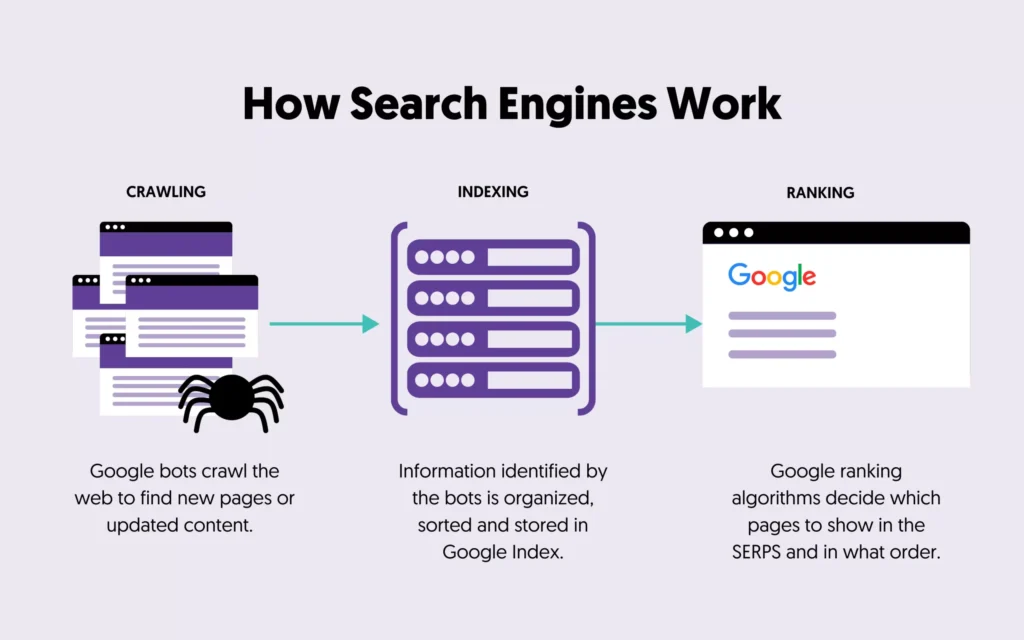
Search engines are the silent gatekeepers of the internet. In the time it takes to blink, they sift through hundreds of billions of web pages, understand your intent, and serve answers that feel almost magical. Yet behind that split-second response lies a meticulously engineered system of crawling, indexing, and ranking. Whether you're a marketer, a business owner, or simply curious, understanding how search engines really work not only satisfies curiosity—it reveals exactly how to make your own content more visible online.
Early search tools were little more than directory listings that matched exact keywords. Archie, launched in 1990, could only index file names. AltaVista introduced full-text search but struggled with relevance. The real transformation began when search engines started analyzing link patterns and user behavior.
Today's engines operate on deep-learning models that consider context, synonyms, and user intent. They no longer just match words; they interpret meaning. The shift from simple keyword matching to semantic search and AI-driven ranking is what makes modern search feel intuitive—and it's a journey that continues to accelerate in 2026.
To understand the "digital magic," you need to look under the hood at three interconnected processes that run continuously.
Search engines use automated programs called crawlers or spiders (such as Googlebot and Bingbot) to roam the internet. A crawler starts with a list of known URLs and follows links from one page to another, much like a person clicking through a website. As it visits pages, it reads the HTML, notes the content, and queues newly discovered links for later visits.
In practice, crawling is a delicate dance. Websites signal which pages should be crawled and how often through robots.txt files and XML sitemaps. Crawlers also respect a "crawl budget"—the number of pages they'll fetch from a single site in a given timeframe—so efficient site architecture matters. If a crawler encounters pages that load slowly, return server errors, or are buried deep in navigation, valuable content may never be discovered. That's one reason why conducting a thorough site audit regularly uncovers hidden crawl obstacles before they hurt your rankings.
Crawling, indexing, and ranking form the backbone of every search engine's operation.
Credit: www.lumar.io
Once a crawler fetches a page, the search engine parses its content and stores a compressed version in a massive database called the index. Think of the index as a digital library catalog that holds a copy of every page the engine knows about—along with keywords, images, videos, and even the meaning extracted from structured data.
Not every page gets indexed. Search engines filter out duplicates, low-quality content, and pages blocked by noindex tags. In a mobile-first world, the mobile version of a page is now the primary resource for indexing. Adding structured data like schema markup helps search engines understand whether a number is a price, a date is an event, or a string is a recipe ingredient—improving the odds that your page appears for relevant queries and rich results.
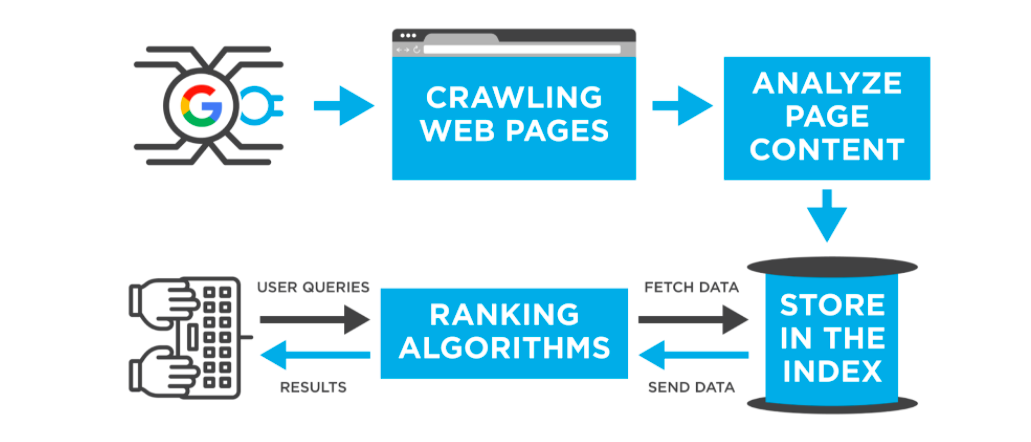
When a user types a query, the search engine doesn't scan the live web—it searches its index. Ranking algorithms then score every potential match using hundreds of signals. The goal is to surface the most relevant, trustworthy, and helpful pages first.
Key ranking signals include:
Search engines continuously update their algorithms. Core updates now reward experience, expertise, authoritativeness, and trustworthiness (E-E-A-T) more than ever, while machine learning components such as RankBrain and BERT help the system understand ambiguous phrases and longer conversational questions.

A simplified view of the query-to-results journey, from the user's question to the final ranked page.
Credit: www.geeksforgeeks.org
Modern crawlers do more than just fetch HTML. They render JavaScript, manage login forms, and can even simulate mobile devices. Googlebot, for example, visits billions of pages daily, prioritizing fresh and frequently updated content. Effective crawling requires clean URL structures, internal linking, and consistent HTTP status codes—something you can control by returning proper HTTP status codes instead of chains of redirects.
The index is organised as an inverted index, mapping each meaningful word or entity to the pages that contain it. Algorithms later use this structure to intersect terms quickly. Without the index, real-time search would be impossible at the scale of billions of searches per day.
Ranking algorithms are tightly guarded, but several known factors dominate. Content that satisfies the user's query fully, without needing to click back to the results, tends to rise. Meanwhile, earning editorial backlinks from authoritative domains remains one of the strongest trust signals. Google’s own guide on how search works emphasizes meaningful interactions and high-quality design, reinforcing that ranking is never about a single trick.
Not all search engines are built the same way. Understanding the landscape gives you a clearer picture of where your audience might find you.
For most businesses, general engines still command the lion's share of traffic, which makes understanding their mechanics an essential digital skill.
Search engine optimization (SEO) is the practice of aligning your website with how search engines find, interpret, and rank pages. When you internalize crawling, indexing, and ranking, SEO stops being a checklist of tactics and becomes a logical, sustainable framework.
Every page element sends a signal. Title tags and meta descriptions help engines understand the page's topic, while clear heading hierarchies make content scannable for both crawlers and users. Internal links guide spiders to deeper pages and distribute authority throughout your site. The text you use to link internally—the anchor text—should be descriptive yet varied, because over-optimized anchors can appear manipulative. The fundamentals of on-page optimization start with writing for humans while keeping the machine-readable structure in mind, and selecting the phrases your audience actually uses is the foundation that makes those on-page efforts pay off.
A healthy backlink profile signals authority. But not all links are equal: a single link from a trusted industry publication can outweigh dozens of directory links. The focus today is on earning links through genuine expertise rather than building them artificially. This also means you should actively watch out for identifying toxic links that could trigger a manual penalty and harm your visibility.
Even brilliant content goes unseen if technical barriers block crawlers. Essential technical practices include submitting an XML sitemap, maintaining a clean robots.txt file, ensuring your site loads in under two seconds, and using HTTPS. When you perform a comprehensive technical checkup on a regular schedule, you catch issues like broken links, orphan pages, or misconfigured redirects before they erode your indexed footprint.
Search engines constantly fight to maintain quality against an ocean of content.
Each challenge pushes search engines toward smarter, more ethical ways of understanding quality—and website owners who align with that direction naturally fare better.
Search is moving deeper into understanding meaning, not just matching strings. Large language models and generative AI now power direct answers, summarizations, and conversational follow-ups directly on the results page. Voice queries, once struggling with accents and context, now account for a significant share of mobile searches, demanding that content be structured to answer natural-language questions.
Visual search is growing: users can snap a photo of a product and find where to buy it instantly. Personalization, meanwhile, is becoming more nuanced—search results can adapt based on location, search history, and even real-time needs, all while respecting privacy boundaries set by regulators.
For content creators, the takeaway is clear: create comprehensive, expert-driven material that answers the questions real people ask, in the formats they prefer. Search engines will continue to reward substance over shortcuts.
Search engines don't just influence curiosity—they drive commerce. Ranking on the first page for a buyer-intent query can transform a business's revenue. Local searches, especially on mobile, lead to in-store visits and phone calls within hours. Appearing in the map pack, featured snippets, or knowledge panels can multiply brand exposure almost overnight.
Search engines are the starting point for most online journeys, making them essential for any digital strategy.
Credit: jellymarketing.ca
Online retailers rely on product-page indexing and structured data to appear in shopping carousels. Service businesses depend on local citations, reviews, and consistent NAP (Name, Address, Phone) data to surface in the "near me" results. Every minute search engines process millions of queries that signal intent, and those signals are pure gold for any company that understands how to capture them.
If you’d like hands-on support growing your visibility in search results, a dedicated virtual assistant can handle your content optimization and SEO tasks consistently—freeing you to focus on serving your customers.
They send out automated bots (spiders) to discover web pages, store and organize the information in a giant index, and then use complex ranking algorithms to show the most relevant and useful pages for each query.
Crawling is the discovery phase where bots find and read pages. Indexing is the storage and organization phase where the content is analyzed, categorized, and added to the search engine's database so it can be retrieved later.
Pages rank higher when they match the search intent well, provide high-quality and authoritative content, offer an excellent user experience, and earn trusted links from other websites. Hundreds of signals combine to determine final positions.
Use the URL inspection tool in Google Search Console or Bing Webmaster Tools to see how a specific page is indexed, identify crawl errors, and monitor coverage. A routine audit helps you spot issues like blocked resources or broken internal links.
Social media shares are not a direct ranking factor in major search engines, but they can increase visibility, which may lead to more organic links and brand mentions—indirectly supporting stronger rankings over time.
Peeling back the layers of crawling, indexing, and ranking reveals that search engines are far more than simple matchmakers. They are continuously learning systems designed to reward helpfulness, expertise, and genuine user satisfaction. Understanding that logic demystifies the "digital magic" and gives you a clear roadmap: build a technically sound, content-rich site that serves human needs first. When you align your efforts with how search engines actually work, visibility stops feeling like luck and starts becoming a predictable outcome of thoughtful strategy.

Ms.Sultana brings over 16 years of expertise working with global Clients by providing different skills and Services. For the last 5 years working as an Affiliate marketer, specializing in high-ticket campaigns that drive exponential growth. She holds a degree in Computer Science and Engineering as well as achieved many more skills certificates from different institute/academies/Platform. As part of the Elite Global Marketing team, Sultana has helped clients generate millions in revenue through strategic partnerships, innovative funnels, and data-driven insights.



















The problem most founders face isn’t hiring the wrong person, it’s giving them work that lives nowhere concrete. If you’ve ever wondered how to manage virtual…

How to communicate with a virtual assistant effectively comes down to one simple truth: these systems aren’t mind readers. They’re patternmatching machines…

You’ve probably read generic advice about hiring help, but managing a virtual assistant remotely isn’t onesizefitsall. The approach you choose depends entirely…