⚠️ Disclosure: This post contains affiliate links. We may earn a commission at no extra cost to you.
⚠️ Disclosure: This post contains affiliate links. We may earn a commission at no extra cost to you.


As online learning becomes the default for upskilling, career changes, and personal education in 2026, the sheer number of available platforms can make choosing the right one feel overwhelming. Coursera has been a household name in e-learning since its 2012 launch, partnering with elite universities and top global companies to offer thousands of courses and credentials. But with competitors like Udemy, edX, and LinkedIn Learning vying for your attention, is Coursera actually the best option for your goals? This in-depth review breaks down its features, pricing, pros, cons, and ideal use cases to help you decide.
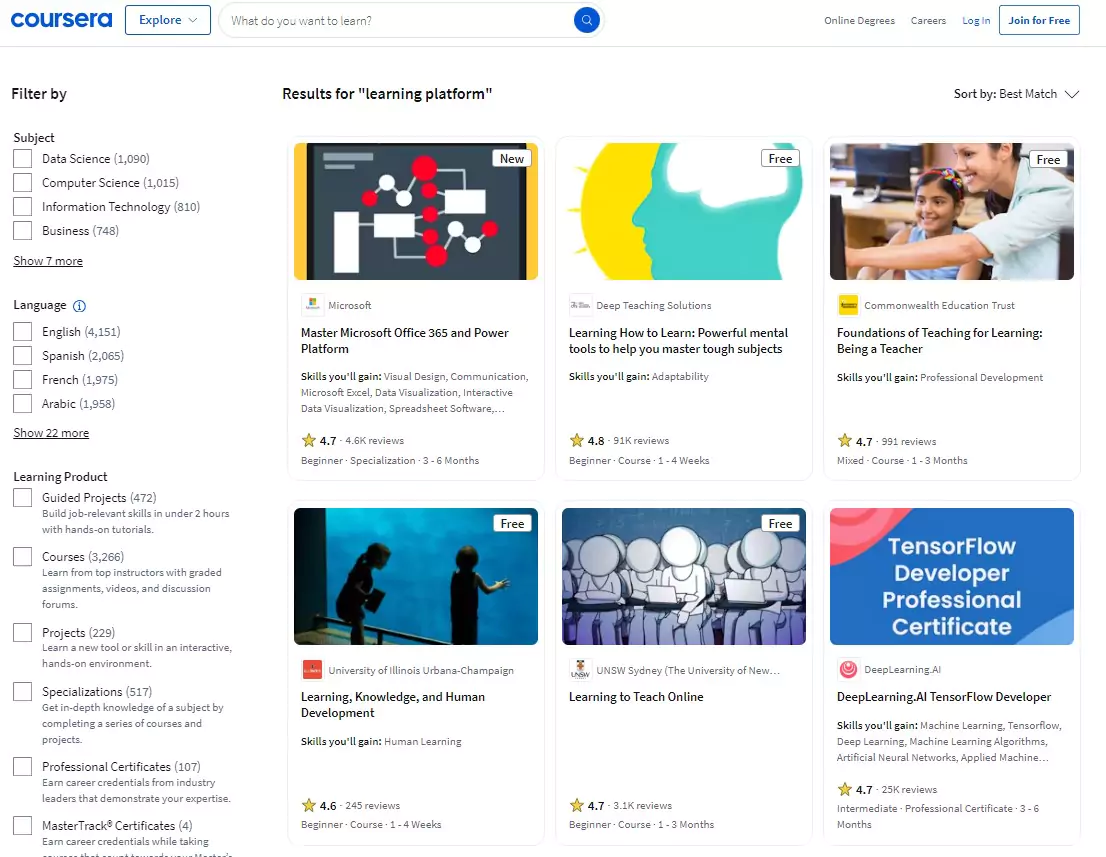 Coursera’s homepage showcases its wide range of university and industry partner courses, from free introductory classes to full accredited degrees.
Founded in 2012 by Stanford computer science professors Andrew Ng and Daphne Koller, Coursera was built with a simple mission: make high-quality education accessible to anyone, anywhere, regardless of location or income. What started as a collection of free university courses has grown into a full-service learning platform serving over 150 million learners worldwide as of 2026.
Coursera partners with more than 300 institutions, including 200+ universities (such as Yale, Stanford, and the University of London) and 100+ industry leaders (including Google, IBM, Meta, and Amazon). Its catalog now includes not just individual courses, but structured specializations, industry-recognized professional certificates, accredited bachelor’s and master’s degrees, and even corporate training solutions for enterprise teams. Unlike platforms that host user-generated content, every Coursera offering is vetted and developed by its partner institutions, ensuring consistent quality across its catalog.
Coursera’s biggest draw is its vast, diverse catalog of learning content. As of 2026, the platform offers more than 10,000 individual courses, 1,500+ specializations, and 200+ degree programs across nearly every subject area, including:
Most courses are available in 40+ languages, with subtitles and translated transcripts for nearly all content, making it accessible to global learners. Credential options range from free, no-credit audit tracks to accredited university degrees, so you can choose a learning path that matches your goals, whether you’re exploring a new hobby or earning a full bachelor’s degree remotely. For learners who want to take multiple courses, Coursera’s full course catalog is organized by subject, skill level, and credential type, making it easy to find exactly what you need.
Many of Coursera’s most popular offerings are developed in partnership with industry leaders to teach job-ready skills. For example, IBM’s data science professional certificate covers Python, SQL, and machine learning with hands-on projects using real industry tools, while Google’s IT Support Professional Certificate prepares learners for entry-level IT roles with training in troubleshooting, networking, and security.
Coursera’s platform is designed for flexibility, with tools that support both self-paced and structured learning. All courses include video lectures, reading materials, quizzes, and hands-on assignments, with most offering peer review opportunities for graded work. The mobile app (available for iOS and Android) lets you download lessons for offline viewing, take notes directly in the app, and track your progress across devices.
In practice, the platform works best for self-motivated learners: most courses have no fixed start or end date, so you can study for 30 minutes a day or 5 hours a week, depending on your schedule. That said, some learners find the platform’s search function clunky, and peer-reviewed assignments can take 2-7 days to be graded if you’re not part of an active cohort. A common mistake new users make is enrolling in a multi-course structured professional track without auditing the introductory course first, only to find the material is more advanced than expected.
Every Coursera course is developed and taught by vetted instructors from partner universities or companies, most of whom are tenured professors, senior industry leaders, or recognized subject matter experts. Unlike user-generated content on platforms like Udemy, Coursera’s curriculum is reviewed by the partner institution to ensure it meets academic or industry standards.
Most course content is updated every 6-12 months to reflect new tools, research, and industry trends. For example, Google’s IT Support certificate is updated twice a year to include training on the latest cloud and cybersecurity tools. Many paid courses also include weekly live Q&A sessions with instructors or teaching assistants, a feature added in 2024 to address past complaints about limited instructor interaction.
*This short overview walks through the core benefits of Coursera for new learners.*Coursera’s pricing model is designed to be flexible, with options for every budget:
For learners who can’t afford paid options, Coursera offers full financial aid for all courses, specializations, and professional certificates. The application process takes ~15 days, requires no credit check, and has no repayment requirement. Coursera reports that the majority of eligible applicants are approved for aid. Many employers also offer free Coursera access as an employee perk, so check with your HR team before paying out of pocket.
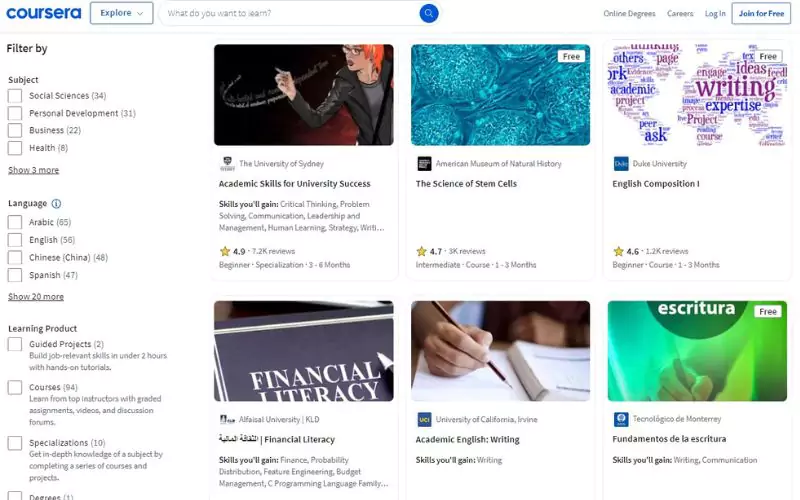 Coursera offers full financial aid for eligible learners, with no repayment required.
Coursera’s broad catalog and flexible pricing make it a strong fit for a wide range of learners:
Real-world outcomes for learners include:
| Prior Role | Completed Credential | Outcome |
|---|---|---|
| Retail associate | Google IT Support Professional Certificate | Hired as junior IT specialist at a regional healthcare system |
| Marketing coordinator | Meta Social Media Marketing Professional Certificate | Promoted to social media manager with higher compensation |
| Recent college graduate | IBM Data Science Professional Certificate | Hired as junior data analyst at a Fortune 500 retail firm |
While Coursera is a top-tier platform for many learners, it’s not the right fit for everyone:
To help you contextualize Coursera’s value, here’s how it compares to three of the most popular online learning platforms in 2026:
| Feature | Coursera | Udemy | edX | LinkedIn Learning |
|---|---|---|---|---|
| Credential Recognition | High (accredited degrees, employer-recognized professional certs) | Low (user-generated, unaccredited) | High (accredited degrees from top universities) | Medium (micro-credentials recognized by some employers) |
| Pricing | Free audit available; $29-$99/course; $399/year for Coursera Plus | $10-$100 per one-time course, no subscription | Free audit available; $50-$200/course; $15k-$60k for degrees | $29.99/month or $299.99/year subscription |
| Ideal Use Case | Career upskilling, accredited credentials, formal education | Niche hobbyist skills, one-off training | STEM/formal degrees, university-aligned learning | Short, job-relevant micro-skills for professionals |
As the table shows, Coursera stands out for learners who need recognized, high-quality credentials, while Udemy is better for cheap, niche hobby courses, and LinkedIn Learning is ideal for quick, professional micro-skills that integrate directly with your job search profile.
Even with its many strengths, Coursera has some common pain points. Here’s how to avoid them:
For most learners, yes. Coursera’s professional certificates are developed in partnership with industry leaders like Google and IBM, and many employers recognize them as proof of job-ready skills for entry-level roles. For academic degrees, all programs are accredited by the partner universities, meaning they hold the same weight as on-campus credentials. That said, for highly regulated fields like nursing or law, you will still need to meet additional state licensing requirements beyond the certificate.
Many learners have landed entry-level roles in tech, marketing, and data analysis using Coursera professional certificates as their primary credential, especially when paired with hands-on projects from the coursework. While results vary by field and employer, Coursera’s industry partnerships mean many certificates are explicitly listed as preferred qualifications on job postings from partner firms.
Yes, you can audit most Coursera courses for free, which gives you access to all video lectures, readings, and discussion forums. You only pay if you want access to graded assignments, official certificates, or specialized content like degree programs.
Coursera Plus is an annual subscription ($399/year as of 2026) that gives you unlimited access to over 7,000 courses, specializations, and professional certificates, plus one included professional certificate per year. It’s a cost-effective option if you plan to take 4 or more individual courses in a 12-month period.
Once you purchase a single course or complete a specialization, you have lifetime access to all course materials, including video lectures, readings, and assignments, as long as Coursera maintains the course. For Coursera Plus subscribers, access to courses is available for the duration of your active subscription, plus 6 months after cancellation.
So is Coursera the best online learning platform in 2026? For learners seeking accredited, employer-recognized credentials from elite institutions, flexible self-paced study, and a catalog that spans everything from introductory coding to full master’s degrees, the answer is a clear yes. Its combination of high-quality, vetted content, flexible pricing (including a free audit option), and strong industry recognition makes it a top choice for career-focused learners.
That said, it’s not the right fit for everyone. If you need hands-on, lab-based training, ultra-niche short courses, or frequent real-time interaction with instructors, platforms like Udemy, edX, or in-person bootcamps will serve you better. If you’re ready to test Coursera for yourself, start with a free audit of a top-rated introductory course to see if the platform’s learning style and content align with your goals before investing in a paid certificate or subscription.
Looking for more guidance on choosing the right online learning path? Check out our guide to the top upskilling resources for career changers this year.
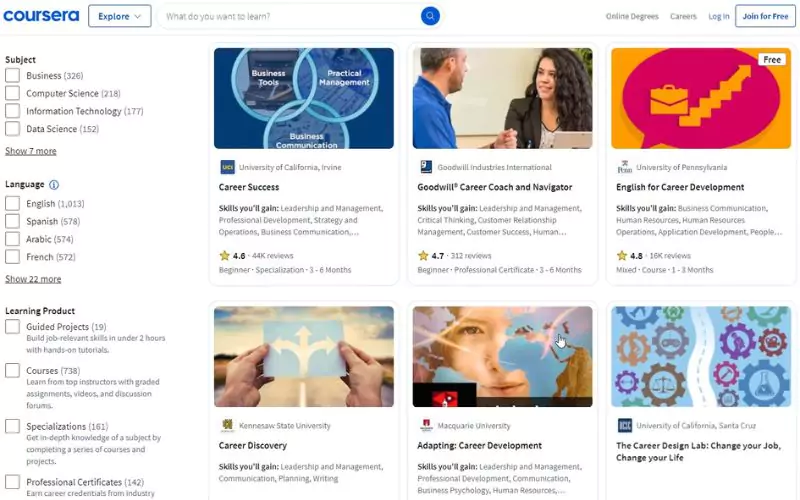 Many learners add Coursera credentials to their resumes or LinkedIn profiles to highlight job-ready skills. Over the past decade, Coursera has consistently evolved to meet the needs of modern learners, adding features like offline mobile access, expanded financial aid, and industry-aligned certificate programs that respond directly to labor market demands. While no single platform is perfect for every learner, its track record of delivering credible, high-quality education at scale makes it a standout choice in the crowded 2026 e-learning landscape. Whether you’re taking your first free course to explore a new interest or investing in an accredited degree to advance your career, Coursera offers the structure, credibility, and flexibility to help you hit your learning goals.
If you’re ready to explore Coursera’s offerings, start with a free audit of a top-rated introductory course in your target field. There’s no payment required to access full lecture content, so you can evaluate the platform’s teaching style, interface, and material depth at your own pace before committing to a paid certificate or subscription.

Ms.Sultana brings over 16 years of expertise working with global Clients by providing different skills and Services. For the last 5 years working as an Affiliate marketer, specializing in high-ticket campaigns that drive exponential growth. She holds a degree in Computer Science and Engineering as well as achieved many more skills certificates from different institute/academies/Platform. As part of the Elite Global Marketing team, Sultana has helped clients generate millions in revenue through strategic partnerships, innovative funnels, and data-driven insights.














Virtual assistant meeting reminders are the silent guardians of our busiest days, turning chaotic schedules into manageable routines. By learning how these…

Virtual assistant calendar organization uses tools and techniques to automate scheduling, sync multiple calendars, and reduce manual planning tasks. Whether…
I know you’ve spent way too many mornings playing Tetris with your schedule across four or five different apps. A virtual assistant to manage multiple…