Table of Contents

How To Become A Virtual Assistant

How To Become A Virtual Assistant: Beginner-To-Pro Guide

[eeatwp_author_bylines]

⚠️ Disclosure: This post contains affiliate links. We may earn a commission at no extra cost to you.

A career as a virtual assistant gives you the freedom to work from anywhere, set your own hours, and build a business around skills you already have—or can learn quickly. You do not need a degree, years of corporate experience, or a huge upfront investment. What you do need is a clear plan, the right habits, and a willingness to solve problems for busy clients.

This guide walks you through the exact path from complete beginner to confident, well-paid professional. You will learn which services to offer, how to price them, where to find clients, the tools that make you look polished, and the mistakes that can slow you down. Every section includes practical steps you can take this week, not just theory.

What Does a Virtual Assistant Actually Do?

A virtual assistant (VA) supports business owners, executives, or teams remotely. Instead of handling chores in a physical office, you manage tasks online—anything from email triage and calendar scheduling to content publishing, customer support, research, data cleanup, and operational workflows.

The scope varies widely. Some VAs choose to be generalists, juggling a dozen different small tasks each day. Others specialize in one or two service areas and become the go-to expert. In practice, a generalist might sort a client’s inbox in the morning, schedule social media posts after lunch, and format a slide deck by the end of the day. A specialist, by contrast, might spend the entire week setting up an automation sequence in a CRM or managing product listings for an eCommerce store.

Many professionals in fields like coaching, real estate, SaaS, and higher education administration rely on virtual assistants to free up their time. As a VA, you become the invisible infrastructure that keeps their business running smoothly.
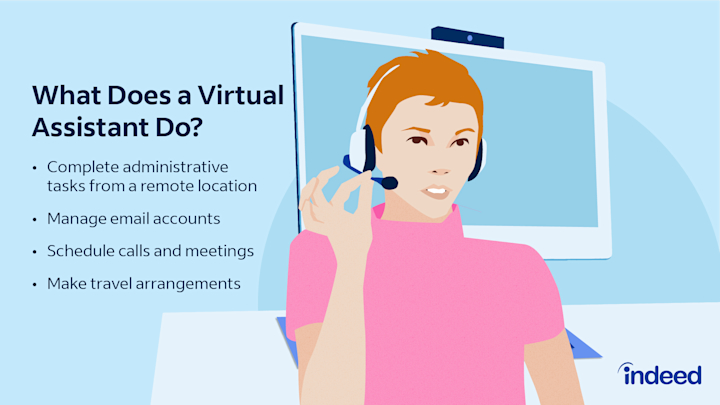
Virtual assistant managing tasks from a remote home office

Remote work setup typical for a virtual assistant handling client tasks.

Source: indeed.com

Essential Skills Every Virtual Assistant Needs

You do not need a diploma, but you do need a core set of practical abilities. These form the foundation for any service you will ever offer.

  • Communication: Write crisp, jargon-free emails. Ask clarifying questions instead of guessing. Summarize action items at the end of every update so the client knows exactly what happened and what comes next.
  • Organization: Use a task manager even for your own to-dos. Maintain logical folder structures, naming conventions, and deadline trackers. Clients notice when you never drop a ball.
  • Tech comfort: Be fluent in Google Workspace or Microsoft 365, video meeting tools like Zoom, and a team chat app such as Slack. You do not need to code, but you should be able to learn new platforms quickly by reading help docs or watching a tutorial.
  • Clean writing and editing: Proofread everything aloud. Match the client’s brand voice. If a client uses short, punchy sentences, do the same.
  • Time management: Block your calendar for deep work. Rank tasks by impact, not by who shouted loudest. Tell a client early if a deadline looks tight, and propose a solution at the same time.
  • Problem-solving instinct: When something breaks, present two possible fixes with pros and cons instead of just reporting the issue. Clients value a VA who thinks ahead.

If you want to strengthen these skills before your first paid project, look into free or low-cost courses from community colleges—many offer virtual assistant starter programs that cover exactly these basics. For deeper, certificate-backed learning, you can also pursue structured skill-development courses that reinforce your credibility without a university price tag.

Audiobook cover highlighting core skills for virtual assistants

A popular audiobook that breaks down the essential skills needed to start as a VA.

Source: audible.com

Step-by-Step Plan to Become a Virtual Assistant (From Zero to Pro)

A clear sequence removes overwhelm. Here is a 12-step roadmap that has worked for hundreds of first-time VAs.
Lay the Groundwork

  1. Define your niche and offer: Pick one to three closely related services. “Inbox management + calendar scheduling” is sharper than “admin help.” If you are unsure where to specialize, selecting a niche that aligns with market demand will help you stand out faster.
  2. Choose your core tool stack: Start with one project management tool, one scheduling app, one document storage platform, and one communication channel. Resist the urge to try every shiny new app; consistency impresses clients more than a cluttered desktop.
  3. Set your initial rates: Research what beginners charge in your target market. A common safe range is $20–$30 per hour. Package rates will come later once you have proof of performance.

Build Proof You Can Deliver

  1. Create a lean portfolio: You do not need paid work to build three short case studies. Use a mock client or a friend’s small business. Show a “before” state (messy inbox, scattered files), a clear process you followed, and the “after” result with numbers if possible.
  2. Build a simple one-page site or profile: Feature your services, a photo, those three samples, a bite-sized “about you” blurb, and one obvious next step—usually a button to book a discovery call.
  3. Prepare a proposal and contract template: Include scope, deliverables, timeline, revision limit, payment terms, and a healthy boundary clause. A clear proposal signals professionalism more than any certificate.
  4. Design an onboarding checklist: List every login, brand asset, and workflow detail you will need during your first week with a client. Send it ahead of time so day one feels effortless.

Start Outreach

  1. Pitch daily: Send at least 10 personalized messages each day. Focus on how you can remove a specific pain point right now—not on your background. Mention one observation about their business to prove you did your homework.
  2. Join platforms and communities: Freelance marketplaces, niche Facebook groups, Slack communities for founders, and LinkedIn all host clients actively looking for help. Being early to a fresh job post often beats a perfect application.

Land and Grow

  1. Offer a small paid trial: Propose a one-week, clearly defined project. For example, “I will clean and organize your email labels and set up three filters for $X.” A low-risk trial often converts to a long-term retainer.
  2. Ask for testimonials immediately: As soon as you finish a successful task, request two or three sentences of feedback. Make it easy by drafting a rough version they can edit.
  3. Systemize and improve: Record a standard operating procedure (SOP) for every repeatable task. Track your time to see which services are most profitable, then adjust your packages accordingly.

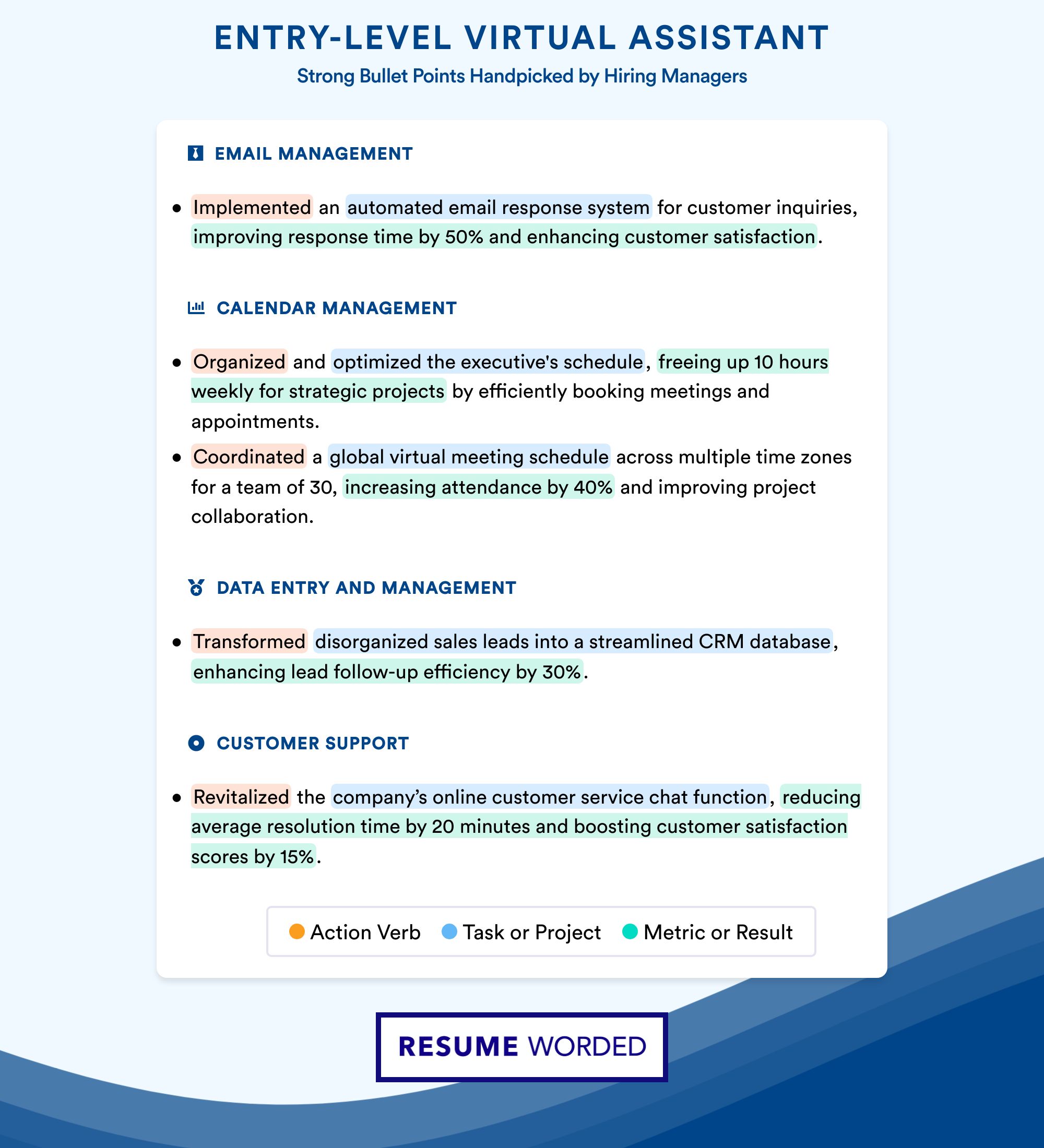
Sample bullet points for an entry-level virtual assistant resume

Resume example showing how to present beginner VA experience effectively.

Source: resumeworded.com

Choosing Your Niche and Services

The fastest way to build a sustainable VA career is to solve a specific problem for a specific type of client. When you position yourself as “the VA for online course creators” or “the operations assistant for fractional CFOs,” your value becomes immediately clear.

Start with services you can deliver confidently right now. As you gain experience, layer on higher-value offerings that command premium rates.

Common beginner services:

  • Inbox and calendar management
  • Internet research and list building
  • Data entry and spreadsheet cleanup
  • Social media scheduling and engagement
  • Basic customer support replies

Intermediate-to-expert services:

  • Project management setup (Asana, ClickUp, Monday.com)
  • SOP and workflow documentation
  • eCommerce product listing and inventory tracking
  • Podcast editing and show notes
  • Email newsletter production and sequence building

One smart move is to begin as a generalist for a narrow industry, such as real estate or supporting higher education teams. Industry knowledge multiplies the impact of every administrative task you perform because you understand the context behind the work.

Book cover on virtual assistant pricing and services

Resource covering how to structure and price VA services for profit.

Source: amazon.com

Setting Your Rates and Pricing Models

Pricing confuses most new VAs. The key is to match the pricing model to both your confidence level and the client’s expectations.

Three Common Models

Model How It Works Best For
Hourly Client pays for time logged First projects, tasks with uncertain scope
Package Fixed price for a defined set of deliverables Repeatable work with clear boundaries
Retainer Monthly payment for a set number of hours or tasks Ongoing relationships, premium clients

Beginners often start around $20–$30 per hour on freelance platforms and gradually raise rates as proof accumulates. VAs with a focused niche and documented results routinely charge $35–$60 per hour, and specialists in operations or automation can push well beyond that.

A common mistake is undercharging for a package because you underestimate the back-and-forth communication it includes. Build a buffer into every fixed-price quote, and never hesitate to renegotiate when the scope creeps.

When presenting a proposal, lead with the outcome you will achieve, not the activities. “You will start each Monday with an organized inbox, pre-screened, with a one-paragraph summary of urgent items” sells far better than “10 hours of email management.”

Building Your Brand and Portfolio to Attract Clients

You do not need a logo or a polished brand guide on day one. You need trust signals.

Essentials to put in place:

  • A clean one-page website or portfolio link: List your services, share three mini case studies, display testimonials, and include a clear call-to-action button.
  • Three concrete work samples: Each should show the starting situation, the action you took, and the measurable result. Even a sample of an inbox reorganization where you cut unread emails from 1,200 to 30 demonstrates competence.
  • Consistent social presence: Pick one platform, such as LinkedIn, and share one short tip or lesson per week. Talk about what you are learning as you build your business—clients hire people they see in motion.
  • Authority signals: Testimonials, relevant course certificates, stats from past projects, and logos of companies you have served (with permission) all reduce a prospect’s perceived risk.

If you need a stronger resume or a CV that translates your previous experience into VA-friendly language, submit your draft for a professional review before sending it to prospects. A well-structured document often makes the difference between getting a discovery call and getting ignored.
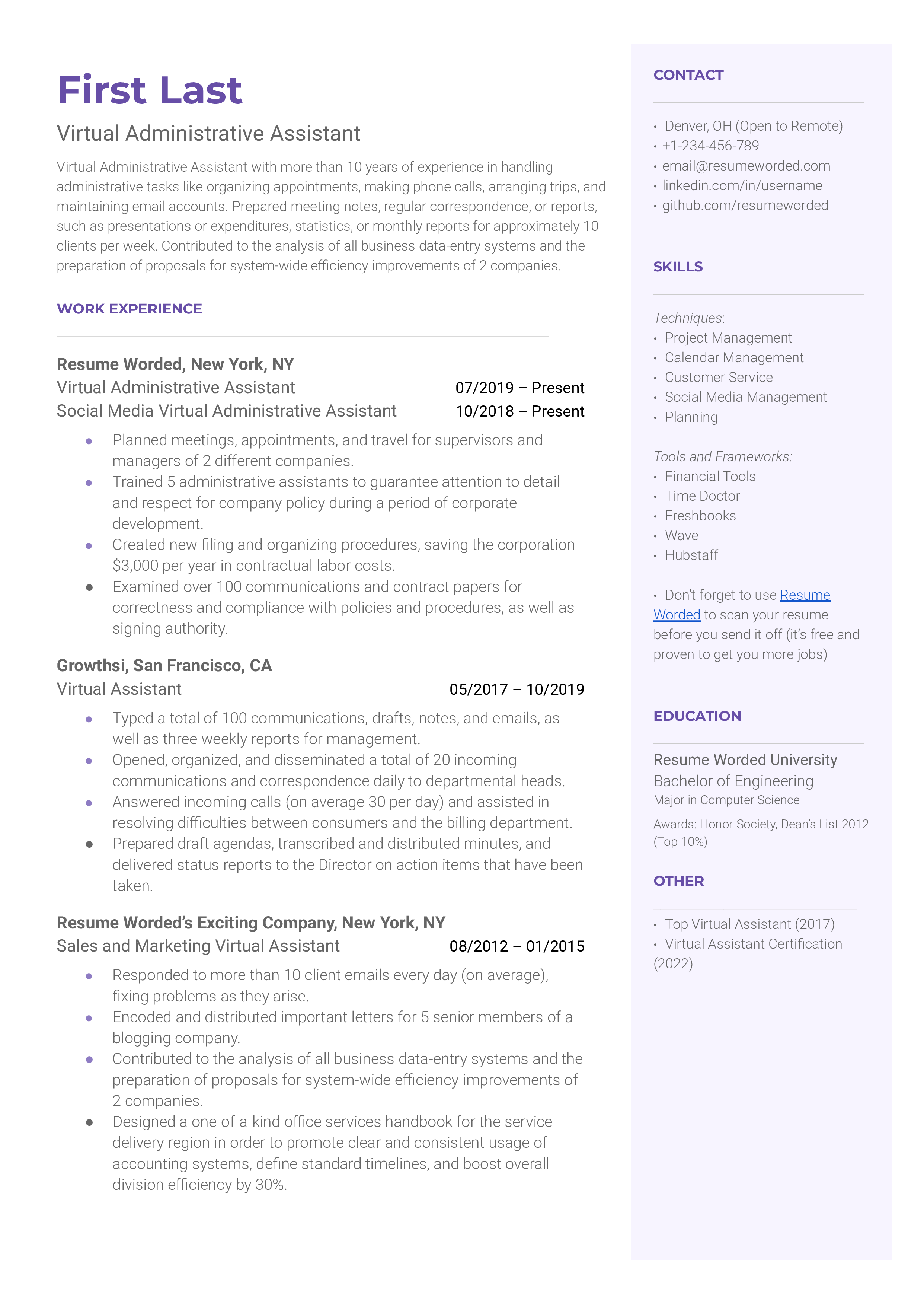
Resume example for a virtual administrative assistant

Template showing how to position administrative skills for VA roles.

Source: resumeworded.com

The Right Tools and Tech Stack for Virtual Assistants

Clients expect you to arrive with a working toolkit. Start simple and add tools only when a gap causes friction.

Core categories and trusted options:

  • Communication: Gmail, Outlook, Slack, Zoom
  • Project management: Trello (simple), Asana (medium), ClickUp (feature-rich)
  • Documents and files: Google Drive, Dropbox, Notion
  • Scheduling: Google Calendar, Calendly
  • Design and media: Canva, Loom (for quick screen recordings)
  • Automation: Zapier, Make
  • Finance: Wave (free), QuickBooks, Stripe, PayPal
  • Password management: 1Password, LastPass

When you are just starting, you can rely on a small set of free tools to deliver professional results without monthly overhead. As you grow, switching to robust apps that scale with you will make complex workflows faster and impress high-end clients.

Loom videos deserve a special mention. Instead of typing a long email explaining a layout change, record a 90-second walkthrough. Clients grasp the context instantly, and it shows you value their time—a small habit that often triggers referrals.

Reddit post warning about fake virtual assistant job offers

Community alert reminding new VAs to verify opportunities and use trusted channels.

Source: reddit.com

How to Find and Land Your First Clients

Many beginners assume clients will appear once they set up a profile. In reality, the first few clients almost always come from direct outreach and consistent follow-through.

Where to Look

  • Niche communities: Facebook groups for online coaches, eCommerce founders, or wedding photographers. Listen first, then offer help where you see a clear gap.
  • Freelance platforms: Upwork, Fiverr, and PeoplePerHour reward speed. Apply within the first hour of a post for the best odds.
  • Remote job boards: Filter for “virtual assistant,” “executive assistant,” or “operations support.”
  • Strategic partnerships: Web designers, copywriters, and marketing consultants often need back-office support for their own clients. A reciprocal referral arrangement works well.

What to Say in Your Pitch

  • Subject line: One specific outcome you can deliver this week. “I can clear your backlog of 300 unanswered emails by Friday” beats “VA available.”
  • Body: One sentence about them, one relevant example of similar work you have done (or a mock project), and one low-friction call to action.
  • Close: Suggest a 15-minute call and bring a ready-to-use audit or sample.

The Follow-Up Sequence

  • Day 2: Send a short Loom video or a useful resource related to their pain point.
  • Day 5: Share a mini audit of something visible—their calendar setup, a broken link on their site—with a friendly note.
  • Day 10: A final respectful message that makes it easy to say yes or no. Most replies come after the second or third touchpoint.

If you worry about having an empty resume, starting from zero experience is more common than you think. The keys are a relevant sample, fast communication, and a manageable paid trial.

Virtual assistant communicating with client during a remote session

VA check-in call illustrating how regular communication builds client trust.

Source: indeed.com

Delivering Excellent Work and Scaling Your VA Business

First impressions matter, but consistent delivery is what keeps clients paying month after month. Your reputation grows quietly in the background every time you save a client from a headache they did not even see coming.

Onboarding That Sets the Tone

Create a secure, organized way to gather logins, brand guidelines, and access to tools. Within the first two days, share a written summary of what you understood the scope to be and ask for confirmation. This single habit prevents 80% of scope disputes later.

Execution Rhythms

  • Send a brief update every Friday covering wins, current tasks, and any blocked items.
  • When a problem arises, bring it up immediately along with two proposed solutions.
  • Document the decisions made so you never have to ask twice.

Quality Control

  • Use a checklist for every repeatable process.
  • Record short SOPs in a shared space like Notion. Update them every time you find a smoother way.
  • Set aside 30 minutes weekly to reflect: what took too long, what can be automated, what should become a package?

Scaling Without Chaos

  • Raise rates on new clients first, then transition existing clients to updated packages with clear added value.
  • Shift from hourly billing to flat-rate or retainer models that reward efficiency.
  • When you reach capacity, subcontract simple, well-documented tasks to a junior VA. Keep client communication and quality checks under your control.

A common turning point for many VAs is systematizing an annoying, time-consuming task—like daily inbox triage—and turning it into a case study that proves you can save a client hours every week. Those proof points justify premium retainers.
Virtual information session graphic for business growth and education

Online informational resource highlighting support for virtual program participants.

Source: csn.edu

Legal, Tax, and Money Management Essentials

Treating your VA work as a real business from the start protects you and makes you look seasoned.

  • Business structure: You can begin as a sole proprietor. As monthly revenue crosses a few thousand dollars, an LLC often becomes worth the small setup cost for the liability protection it provides. Check your local rules or consult a small business advisor.
  • Contracts are non-negotiable: Always use a written agreement. Include the scope of work, payment terms, turnaround times, confidentiality, and a termination clause. Even a simple one-page contract prevents misunderstandings.
  • Payment hygiene: Request a deposit for new clients, especially for project-based work. Send professional invoices with clear due dates, and do not be shy about a reasonable late fee if a client repeatedly pays late.
  • Tax planning: Set aside 25–30% of every payment in a separate account immediately. Self-employment tax obligations catch many new freelancers off guard. For specifics on what you owe and when, review the self-employment tax guidelines from the IRS or talk to a qualified accountant.
  • Insurance: Professional liability coverage is worth exploring once you handle sensitive data or have a retainer client base. It is inexpensive and adds a layer of credibility.

Financial stability as a VA is not about earning the highest hourly rate—it is about predictability. Retainers and package clients smooth out your income and let you plan beyond next week.

Common Pitfalls and How to Avoid Them

Most struggling virtual assistants hit the same roadblocks. Recognizing them early saves months of frustration.

  • Scope creep: A client keeps adding small “quick favours” until you are working for free. Prevent it with a crystal-clear initial scope and a polite, pre-written message for change requests: “Happy to help with that. I will send a quick updated estimate so we are aligned.”
  • Underpricing: Beginners often charge based on what they would accept as an employee, not what the market will bear. The fix: raise prices on your very next proposal. Clients judge quality partly by price; too low can read as inexperienced.
  • No clear niche: A “VA for anything” struggles to get noticed. Pick one industry or one service stack. You can always broaden later, but a sharp focus generates referrals.
  • Weak onboarding: Without a checklist, you miss critical information and burn the first week just chasing access. A repeatable onboarding process shows you have done this before.
  • Silence during work: When clients do not hear from you, they assume nothing is happening. A 90-second Friday video update costs you little and keeps renewal conversations easy.
  • Chasing tools instead of results: Learning every new project management app feels productive, but the best VAs win with consistent execution, not a flashy tech stack.

If you ever feel stuck, pick one issue from this list and fix only that for a full week. Gradual, focused improvement compounds far more than trying to overhaul everything at once.

Career Progression: From Beginner to Expert Virtual Assistant

Your title may stay the same, but your role and income can change dramatically over time.

Foundation stage (0–6 months)

  • Focus: general admin, inbox, research, social scheduling.
  • Primary goal: collect three strong testimonials and move from hourly to at least one retainer client.

Growth stage (6–18 months)

  • Focus: operations, workflow automation, CRM management, content systems.
  • Primary goal: build a roster of two to four steady clients on retainers or high-value packages, and document every process.

Expert stage (18 months and beyond)

  • Roles: online business manager (OBM), systems strategist, or fractional operations lead.
  • Primary goal: command premium retainers, selectively work with clients who value strategic input, and step away from task-only execution.

Advanced career paths

  • Agency model: Hire junior VAs, assign them to your SOPs, and retain quality control. You earn on the margin while scaling impact.
  • Consulting: Audit a client’s systems, design a new workflow, train their team, and exit. This model often pays per project rather than per hour.
  • Mentorship and templates: Package your checklists, SOP libraries, and training videos into a digital resource that generates passive income alongside client work.

The progression from beginner to pro is not a straight line. It happens in jumps every time you confidently take on a slightly harder challenge—such as stepping into a specialized higher-ed support role or building an automation that saves a client 10 hours a week.

Frequently Asked Questions

How long does it take to start earning as a virtual assistant?

You can land a paid trial within two to six weeks if you pitch daily and have two or three solid samples ready. The timeline depends far more on your outreach consistency than on a credential.

Do I need any certifications to begin?

No. Clients value proof of work over certificates. That said, targeted short courses in tools like Asana or in specific skills like email copywriting can make your proposals sharper. Only invest in training that directly improves a service you already plan to sell.

What is a realistic income for a beginner virtual assistant?

Most new VAs start between $20 and $30 per hour. With a clear niche and strong testimonials, raising rates to $35–$60 per hour is common within the first year. Highly specialized operations VAs often surpass $75 per hour.

Which services should I offer first?

Inbox and calendar management, internet research, data entry, and social media scheduling are the easiest to learn and the most in demand. They give you quick wins and client testimonials you can leverage later for higher-ticket work.

How do I find clients if I have no prior experience?

Create mock work samples that mirror what a real client would need. Send personalized pitches that reference the prospect’s actual business, and offer a low-cost, clearly scoped trial. Following up with a short personalized Loom video often seals the deal.

Can virtual assistant work become a full-time career?

Absolutely. Many VAs build a full-time income from two to four retainer clients. With systems and subcontractors, you can scale beyond a single person’s capacity while maintaining a flexible schedule.

What if I am not particularly tech-savvy?

Start with one or two simple tools and tasks you already understand. Learn one new tool per week using free tutorials. Record your own processes as you learn; these notes become valuable SOPs later.

How can I stand out from other virtual assistants?

Pick a narrow audience, lead with concrete outcomes instead of task lists, and over-communicate during the first month. Clients routinely tell us that proactive updates and a clear summary at the end of each week are the reasons they stay with a VA for years.

Conclusion

Becoming a virtual assistant is not about waiting until you feel ready; it is about taking the first few deliberate steps while you build proof along the way. Pick a tight service offering, create three small samples, and send daily outreach. Use checklists and SOPs to deliver work that feels effortless to the client, even if you are working hard behind the scenes.

Give yourself a 30-day challenge: define your niche, build a simple portfolio page, pitch 10 prospects every weekday, and land a paid trial. As you gain momentum, revisit this guide for the next stage of growth—raising rates, niching further, or scaling with systems.

For ongoing resources, strategies, and real-world playbooks, explore our growing library of virtual assistant insights. Your next client is closer than you think.

Picture of Ms.Sultana
Ms.Sultana

Affiliate Marketer | SEO Specialist | Blogger at Elite Global Marketing Agency

Ms.Sultana brings over 16 years of expertise working with global Clients by providing different skills and Services. For the last 5 years working as an Affiliate marketer, specializing in high-ticket campaigns that drive exponential growth. She holds a degree in Computer Science and Engineering as well as achieved many more skills certificates from different institute/academies/Platform. As part of the Elite Global Marketing team, Sultana has helped clients generate millions in revenue through strategic partnerships, innovative funnels, and data-driven insights. She’s passionate about empowering businesses to scale by connecting them with the right affiliate opportunities.
Explore our resources or connect with us on LinkedIn to stay ahead in affiliate marketing.

Related Posts