⚠️ Disclosure: This post contains affiliate links. We may earn a commission at no extra cost to you.
⚠️ Disclosure: This post contains affiliate links. We may earn a commission at no extra cost to you.


The demand for skilled virtual assistants hasn’t slowed down. Even as we move through 2026, the fundamentals that made 2025 a breakthrough year for remote support professionals are still rock solid—and in many ways, more important than ever. Business owners, entrepreneurs, and growing teams are actively looking for reliable help with email management, scheduling, content creation, bookkeeping, and customer support. The challenge is no longer if there are enough opportunities but how to stand out in a crowded market and consistently attract the right clients.
This guide walks you through a complete, actionable system for finding and landing virtual assistant clients. You’ll learn how to position yourself, where to show up, and what to say—so you stop chasing leads and start having conversations that convert.
Generalist virtual assistants are easy to find. Specialists are hired. Picking a niche narrows your focus, makes your marketing sharper, and lets you charge higher rates because you’re solving a specific problem for a specific kind of client.
When you specialize, you’re no longer competing against every other VA on the internet. Instead, you become the go-to person for a defined set of tasks. Clients trust specialized assistants more quickly because they see deep expertise rather than a long list of “I can do anything.”
A clear niche also leads to:
Before you commit to a niche, validate that people are willing to pay for it. Look at job boards like Upwork, Freelancer, and We Work Remotely and note which VA tasks appear over and over. Join Facebook groups and LinkedIn communities where business owners discuss their pain points. The U.S. Bureau of Labor Statistics projects steady demand for administrative and secretarial roles, and many of those functions are now performed remotely—meaning the need for virtual assistants is well-supported by broad labor trends. (You can review the occupational outlook for administrative assistants at the Bureau of Labor Statistics.)
High-demand niches that consistently attract well-paying clients include:
| Niche | Common Services |
|---|---|
| Social Media Management | Content creation, scheduling, community engagement, analytics |
| Email Marketing | Campaign setup, automation, list management, copywriting |
| Content Writing & Editing | Blog posts, newsletters, SEO articles, proofreading |
| E-commerce Support | Product listings, order processing, customer service |
| Real Estate Administration | Transaction coordination, MLS updates, lead follow-up |
| Course & Membership Support | Platform management, student support, launch assistance |
Choose a niche that aligns with both your skills and a clear market need. Even a modest overlap between what you enjoy and what businesses will pay for gives you a powerful head start.
A professional website acts as your digital storefront. It’s the place where potential clients go to verify your credibility, understand exactly what you offer, and decide whether to book a call.
A clean, easy-to-navigate site builds trust faster than a resume alone. Include these core pages:
Keep the design consistent. Use the same fonts, colors, and tone across all pages so the experience feels cohesive and professional.
Even a beautiful website is useless if no one finds it. Basic on-page SEO helps search engines connect you with people searching for virtual assistant services.
Regularly update your site with fresh content—a blog post, a new case study, or a client success story—to signal to search engines that you’re active and relevant.
A portfolio isn’t just a collection of work samples; it’s proof that you can deliver results. When a potential client sees concrete examples of what you’ve done, their risk of hiring you drops dramatically.
Don’t just list skills. Show them in action. For each project in your portfolio, include a brief description of the problem, the specific actions you took, and the outcome. If you redesigned a client’s email sequence and increased open rates by 18%, say so. If you organized a chaotic inbox and reduced response time from 24 hours to 2 hours, put that number front and center.
Use a mix of formats: before-and-after screenshots, short video walkthroughs, and links to live work. Group your examples by niche so that a real estate broker immediately sees relevant samples, not a generic admin task list.
Testimonials are the social proof that closes the deal. Ask every satisfied client for a short paragraph that highlights a specific result. Instead of a vague “She’s great,” guide them to mention what you helped them accomplish—“Thanks to her, our podcast launch was organized and on time, and we didn’t miss a single deadline.”
Display testimonials near your services and portfolio. A name, a headshot, and a company name (with permission) make the endorsement feel real. If you’re just starting out and don’t have paid client testimonials, offer a free mini-project to a colleague or a nonprofit in your niche in exchange for a detailed testimonial.
Social media is where you can demonstrate your expertise publicly, build relationships, and get on the radar of potential clients before they ever post a job.
Not every platform is right for every VA. Pick one or two where your ideal clients are already active.
Your content should teach, not just advertise. Share tips that solve a small but painful problem your ideal client faces. For example, a VA specializing in email management could post a quick video showing how to set up a Gmail filter that saves 30 minutes a week. A real estate VA could share a checklist for preparing a listing’s paperwork.
Mix formats: carousel posts on LinkedIn, short videos on Instagram, and text-based “what I wish I knew” threads. Always end with a gentle invitation to learn more, like “If you’d like help implementing this, my DMs are open.”
Promote your services on social platforms to reach your ideal clients.

Many of the best VA client relationships start with a referral from someone who already knows, likes, and trusts you. Networking isn’t about handing out business cards; it’s about building genuine connections.
Actively participate in communities where your clients hang out. LinkedIn groups, Slack communities for online business owners, and industry-specific Facebook groups are goldmines. When someone asks a question you can answer, give a thorough, helpful response without pitching. Your name will become familiar, and people will naturally check out your profile.
Consider creating a profile on freelance platforms like Upwork and Fiverr, but also think of them as networking tools. A well-crafted profile that showcases your specialization can lead to direct messages even when you’re not bidding on projects.
Virtual and in-person events put you in the same room as decision-makers. Attend webinars, virtual summits, and local business meetups. When you introduce yourself, don’t lead with “I’m a virtual assistant.” Instead, say something like “I help online course creators manage their student support so they can focus on content.” That shifts the conversation from a job title to a clear value proposition.
Always follow up within 48 hours with a personalized message—reference something you discussed and suggest a no-pressure coffee chat.
A free discovery call is not a “free consultation” where you give away an hour of work. It’s a structured conversation to determine if there’s a mutual fit.
In a 20-minute call, focus on understanding the client’s situation. Ask open-ended questions: “What’s taking up most of your time right now?” or “What tasks would you love to never touch again?” Listen more than you talk. When you reflect back what you’ve heard and offer one or two specific ways you could help, you demonstrate expertise without a hard sell.
Use the call to show how you think, not just what you do. If a client mentions a chaotic inbox, you might say, “Here’s a simple three-step process I use that usually clears the backlog in the first week.” That builds confidence far more than a generic list of services. End the call by outlining clear next steps, whether that’s a paid trial project or a proposal.
Freelance platforms are a powerful way to get your first few clients, build a reputation, and generate ongoing inbound leads.
The right platform depends on your niche and how you like to work:
Your profile is your pitch. Invest time in getting it right.
Several in-depth platform reviews can help you choose where to start. For a side-by-side look at features and pricing, check out this detailed FlexJobs assessment, a Getmagic platform overview, a The Virtual Savvy training review, and a Time Etc service evaluation. Those resources can help you decide which route aligns with your business model.
Email marketing gives you a direct channel to potential clients who have already shown interest. It’s a long-term asset that keeps working for you even when you’re busy with billable hours.
Start simple. Offer a free, high-value resource on your website in exchange for an email address. This could be a checklist, a template, a mini-tutorial, or a short ebook directly related to the problem you solve. For example, a VA specializing in podcast support might offer a “Podcast Launch Prep Checklist.”
Place the sign-up form prominently on your homepage, in your blog posts, and on your contact page. Use clear language: “Get the free checklist and weekly tips to streamline your podcast production.”
Don’t just send a newsletter and hope someone will reply. Structure your emails to nurture trust and encourage action. A simple sequence might look like:
Personalize every email when possible. Use the recipient’s first name and segment your list by niche or interest. Track open rates and click rates to see what resonates, and tweak your subject lines and calls to action accordingly.
Pricing is one of the biggest hurdles for new virtual assistants. Underpricing can lead to burnout and resentment, while overpricing without proof can stall your pipeline. The goal is to find a rate that reflects your value and fits your ideal client’s budget.
Hourly billing is common on platforms like Upwork, but it can cap your earning potential. Package pricing—where you charge a flat fee for a defined set of deliverables—often works better for both you and the client. A package gives the client predictable costs and rewards you for efficiency.
Common packages include:
Research what other VAs in your niche and geography are charging. Look at job postings, freelance profiles, and VA communities. Typical rates for experienced, specialized VAs range from $30 to $75+ per hour in the U.S., but rates vary by niche and skill level. Adjust as you gain testimonials and measurable results.
Start with a rate that feels slightly uncomfortable but still justifiable. After you’ve completed a few successful projects and collected strong testimonials, raise your rates for new clients. Existing clients can be grandfathered in for a period or given notice of a rate increase when the value you deliver is clear and documented.
If you’re in the U.S., remember to account for self-employment taxes in your pricing. The IRS provides a Self-Employed Individuals Tax Center that outlines what you need to know about estimated taxes, deductions, and recordkeeping.
Getting a client is just the beginning. A smooth onboarding process reduces churn and turns one-time projects into long-term partnerships.
Even for a small project, use a simple contract or letter of agreement that outlines the scope of work, payment terms, deadlines, and confidentiality. This protects both parties and sets professional boundaries from day one.
Create a repeatable onboarding sequence. Send a welcome email that includes:
A well-organized virtual assistant can manage multiple clients efficiently.

Set a regular check-in cadence—weekly or biweekly—to review progress, address concerns, and discuss new needs. When you spot a recurring task that falls outside your current scope, frame it as a natural extension: “I noticed you’re spending a lot of time on your newsletter. I could take that over as part of a content support add-on if you’re interested.” This approach grows your income without a hard sell.
Happy clients are your best marketing channel. A structured referral system can generate a steady stream of leads without additional advertising spend.
Timing matters. Ask for a referral right after a successful project milestone or when a client expresses gratitude. Make it easy: “I’m glad the launch went smoothly. If you know any other course creators who could use this kind of support, I’d be grateful for an introduction.”
Consider offering a small incentive, such as a discount on the next month’s services, for every referral that becomes a client.
Encourage clients to leave reviews on your LinkedIn profile, Google Business Profile (if you have one), and freelance platform profiles. Embed video testimonials on your website for even greater impact. The more social proof you accumulate, the less you’ll need to pitch—clients will come to you.
Learn proven methods to attract high-paying clients.

Start by offering a free or low-cost project to a family member, friend, or a nonprofit in your chosen niche. Document the process, collect a testimonial, and build a portfolio piece. Then leverage freelance platforms and networking groups to pitch your service with real proof of results.
Upwork, Fiverr, and LinkedIn remain the most reliable platforms for finding VA clients. PeoplePerHour and Freelancer are also viable. The key is to choose one or two, build a complete profile, and actively engage rather than spreading yourself thin.
Focus on free channels: optimize your LinkedIn profile, contribute to relevant Facebook and Slack communities, and create simple educational content on social media. A professional website and email list can be built with low-cost tools, and a portfolio of free or low-cost projects will fill initial credibility gaps.
Clients consistently value communication, reliability, and proficiency in specific tools (like Notion, Asana, Canva, or Klaviyo). Beyond that, niche-specific skills—such as real estate transaction coordination or podcast production—are in high demand and command higher rates.
It varies widely. With consistent outreach, a strong niche, and a professional online presence, many VAs land their first paying client within 30 to 60 days and reach a full roster within 6 to 12 months. Treat it like a business launch, and momentum will build.
Securing clients as a virtual assistant isn’t about luck or a massive following. It’s about clarity, consistency, and showing up in the right places with a message that resonates. When you specialize, build a strong online presence, and nurture relationships through genuine networking and smart follow-ups, you shift from constantly hunting for the next gig to having clients seek you out.
Start by picking one strategy from this guide—maybe refining your niche or updating your LinkedIn profile—and implement it this week. Each small step compounds. Your next client is out there, and they’re looking for exactly what you offer.

Ms.Sultana brings over 16 years of expertise working with global Clients by providing different skills and Services. For the last 5 years working as an Affiliate marketer, specializing in high-ticket campaigns that drive exponential growth. She holds a degree in Computer Science and Engineering as well as achieved many more skills certificates from different institute/academies/Platform. As part of the Elite Global Marketing team, Sultana has helped clients generate millions in revenue through strategic partnerships, innovative funnels, and data-driven insights.










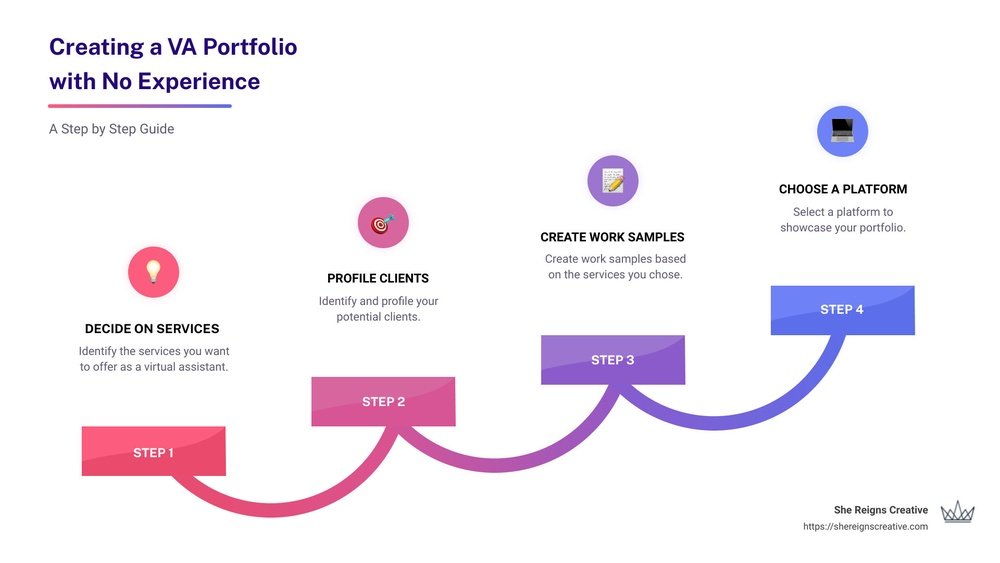
A virtual assistant portfolio is more than a collection of past tasks. It is the single most persuasive tool you have to convert a curious visitor into…

You already have the skills to support busy professionals—but turning those skills into a steady stream of clients takes intentional marketing…
A career as a virtual assistant gives you the freedom to work from anywhere, set your own hours, and build a business around skills you already have—or…