⚠️ Disclosure: This post contains affiliate links. We may earn a commission at no extra cost to you.
⚠️ Disclosure: This post contains affiliate links. We may earn a commission at no extra cost to you.


The virtual assistant industry has matured dramatically. What once meant "remote admin support" now spans high-ticket specialties like launch management, automation consulting, and fractional operations roles. Business owners, agency founders, and solo professionals aren't just looking for task-doers—they're hiring outcome partners who reduce chaos and create bandwidth for strategic work.
If you want to build something that lasts beyond a handful of freelance gigs, you need more than a laptop and willingness. You need a niche that commands premium rates, pricing structures that reward results, delivery systems that run without you, and a scaling model that doesn't burn you out. This guide walks through each phase with practical steps, honest trade-offs, and the operational details that separate a side hustle from a real business.

Source: amazon.com
A virtual assistant business sells specialized support delivered remotely. That support can take the form of executive admin, marketing implementation, customer success, or technical operations. The common thread is that clients are buying back their time and mental energy, not just checking off to-do list items.
The buyers have shifted. While entrepreneurs and coaches remain strong segments, demand has grown from mid-sized agencies, e-commerce brands scaling past six figures, and professional service firms that need fractional operations help without hiring full-time staff. These clients typically search for someone who understands their industry's rhythms, tools, and terminology from day one.
The most profitable positioning today is outcome-oriented. Instead of selling 20 hours of general help, you sell "inbox zero and a triaged calendar daily" or "weekly podcast published with show notes and guest follow-ups." When you package based on what the client gets, not what you do, you move from a cost line item to a value investment. Pricing conversations shift from "can I get someone cheaper?" to "how soon can we start?"
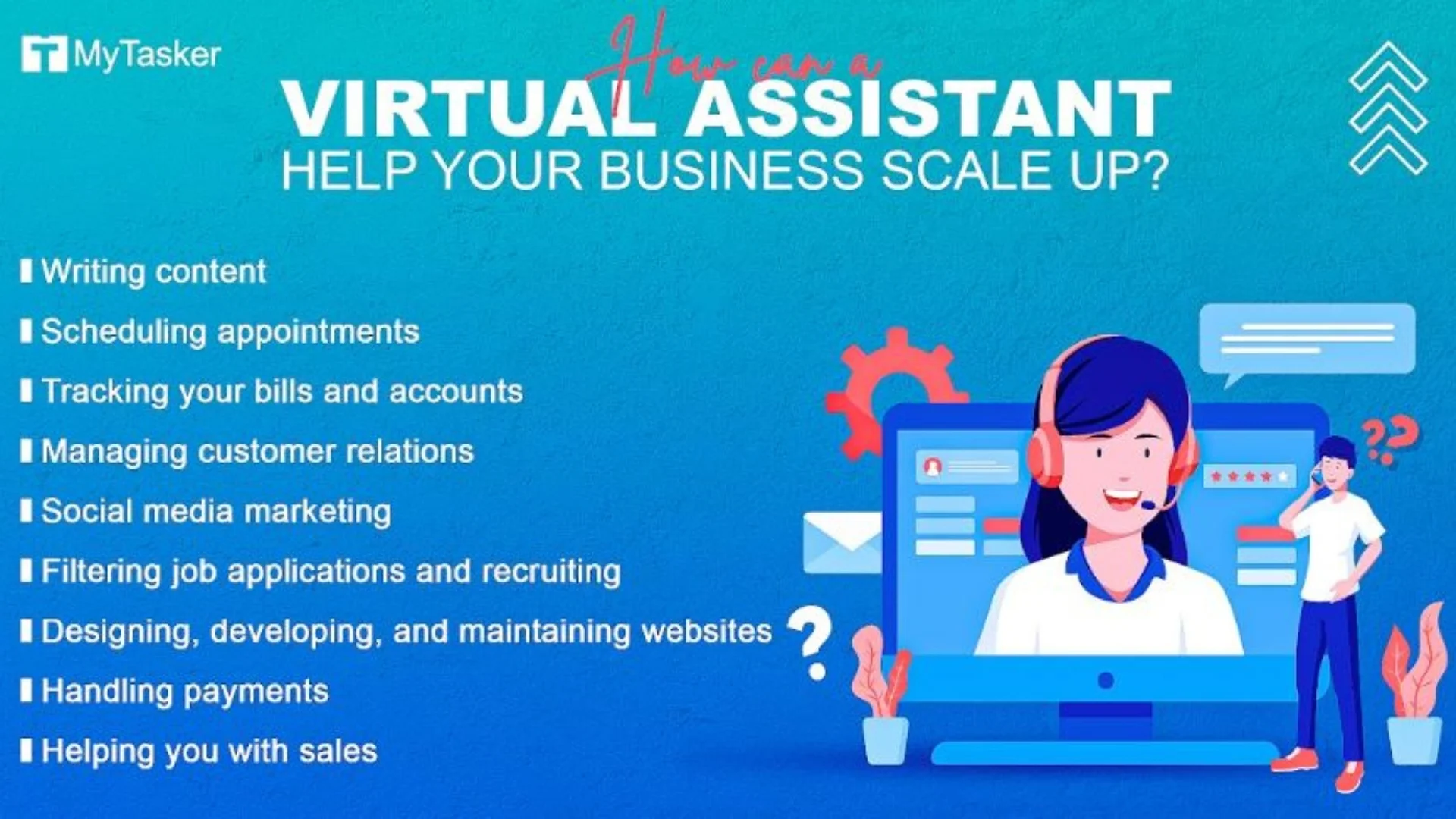
A tight understanding of the core skills buyers consistently look for helps you shape your offer before you even pitch. Those skills become the backbone of your service menu.
Source: mytasker.com
Building a VA business follows a logical sequence. Skip a step, and you'll feel the friction later—usually as underpricing, client mismatches, or delivery bottlenecks.
Validate a focused niche. Pick one or two adjacent industries where you either have direct experience or can learn the operational workflows quickly. Talk to five potential buyers, not to pitch, but to listen for the specific pains they pay to solve.
Build offers around solved problems. Package a handful of related tasks into a named offer with clear inputs, outputs, and turnaround expectations. Avoid the "anything you need" trap.
Set up your lightweight brand infrastructure. A one-page site with your offer, a booking link, a short Loom-style introduction video, and a professional email address is enough to start taking calls.
Sell through warm channels before scaling outreach. Your first two or three clients almost always come from people who already know your work ethic. Former managers, colleagues, and industry contacts are the fastest path to paid work.
Deliver with documented systems from day one. Even when it's just you, write a simple standard operating procedure for each recurring task. This discipline makes delegation frictionless later.
Scale methodically. Whether you raise rates and stay solo, productize a single offer, or build a small team, scale happens when you stop being the bottleneck in delivery.
The sequence matters because early decisions—especially around niche and packaging—compound. A vague "I help busy professionals" positioning makes every marketing effort harder, while "I manage email marketing calendars for course creators on Kajabi" makes referrals nearly automatic.
A niche is not a limitation—it's the filter that makes you the obvious choice. Clients trust specialists faster than generalists, and specialists command higher rates.
Avoid listing skills like "I know Canva and Calendly." Instead, name the result:
Focus on one core offer for one niche at launch. Developing deeper expertise in that focus area makes your delivery more efficient and your marketing more specific. You can always add complementary offers once the first one is running smoothly and generating referrals.
Source: notion.com
Pricing shapes everything: which clients you attract, how they treat the relationship, and whether your business actually makes money. Price to build a sustainable operation, not to win every conversation.
Start with your target monthly income, not with what "the market pays."
That pushes the rate to roughly $100/hour, which becomes your package pricing anchor. Communicate packages in flat weekly or monthly terms so clients think about value received, not hourly cost.
A common mistake is pricing against what friends charge or what budget-conscious buyers say is "reasonable." The clients who push hardest for low hourly rates are almost always the ones who scope-creep, delay payment, and churn fastest. Protecting your rate protects your client quality.
For clients where your work directly influences revenue—like booking sales calls or show guests—consider a modest performance bonus layered on top of the base retainer. This aligns incentives and makes renewal conversations easier. When you're ready to formalize your business structure, understanding how to set up operations properly gives you a firm foundation.

Source: myoutdesk.com
Operational hygiene isn't exciting, but it's what prevents a single bad client situation from derailing your business.
A lean, reliable tool set handles 90% of daily operations:
| Function | Common Options |
|---|---|
| Email, docs, calendar | Google Workspace or Microsoft 365 |
| Project and task tracking | Asana, Trello, ClickUp, Notion |
| Password sharing | 1Password, LastPass (with shared vaults) |
| Time tracking | Toggl Track, Clockify |
| Async communication | Loom, Slack, or dedicated client channels |
| Scheduling | Calendly, SavvyCal |
When every repeatable task has a documented process, you stop being the only person who can deliver. That's the gate that separates freelancers from business owners. A well-structured setup also supports productive working relationships once you bring on help.
Source: notion.com
The goal isn't to be everywhere. It's to be findable and hireable by the specific people who need your niche offer.
An effective outreach message does three things: names a specific problem, shows you've solved it before, and makes a low-pressure invitation.
Frame it around the client's pain: "I notice many course creators lose enrollment momentum during launch week because support tickets pile up. I built a triage system that keeps response time under four hours during launches—happy to share how it works if you're open to a 15-minute call."
Pipeline discipline matters early. A practical target is five new conversations per week with potential clients or referral sources. Not all convert immediately, but the conversations compound.
The first two weeks with a client set expectations for the entire relationship. A disjointed start signals amateur operation; a smooth onboarding signals competence.
Daily flow:
Weekly rhythm:
Clients renew based on felt experience, not just task completion. When they feel informed, in control, and free of low-level operational noise, retention climbs without negotiation. Businesses that integrate VA support well tend to expand the relationship over time.

Source: vavavirtual.com
Scaling is not just "get more clients." It's building a structure where revenue grows without requiring proportionally more of your personal hours.
| Model | Description | Best For |
|---|---|---|
| Premium solo | Raise rates, serve fewer clients, sell deep niche expertise | Specialists who love the craft of delivery |
| Productized service | One offer, fixed scope, flat monthly fee, repeatable process | Operators who want predictable, systematized income |
| Micro agency | Hire 2–5 VAs, maintain bench capacity, standardize QA | Owners who enjoy managing teams and systems |
| Specialist pods | Small teams grouped by function (admin, content, support) | Businesses serving clients with diverse needs |
In practice, the shift from solo to team often stalls not because of lack of clients, but because the owner never carved out time to document processes and train. Block non-billable hours specifically for building your operations infrastructure—it's the highest-leverage work at this stage.
Running on intuition feels fine when revenue is small. As you grow, numbers surface problems before they become crises.
Monthly financial reviews don't need to be complex. Look at revenue concentration—are two clients responsible for 70% of income? Check churn reasons for patterns. Compare actual delivery hours against what you priced. Those three checks catch most problems early.
These patterns show up repeatedly across new and growing VA businesses. Recognizing them early saves months of frustration.
The deeper thread across these mistakes is treating the business like a collection of gigs rather than an operating system. Every recurring problem has a process solution, even if the solution starts as a simple checklist.
A functional start requires a reliable computer, internet connection, and a few software subscriptions (email, project management, password manager, scheduling tool). Most people launch with under $300 in initial setup costs, plus a small buffer for living expenses during the client-building phase.
The highest-probability path is warm outreach to people who already trust your work ethic. Former managers, past colleagues, and industry contacts convert far faster than cold leads. Share a specific, named offer, show one concrete example of what you can do, and invite a short conversation.
Packages produce better margins, clearer scope, and easier scaling. Hourly billing punishes efficiency and invites client scrutiny on time logs. Use hourly only for short trial engagements, with a clear path to a package after the first month.
A polished LinkedIn profile with a clear headline about who you serve and what outcome you deliver can generate early conversations. A one-page site adds credibility and gives you a place to send prospects, but it doesn't need to exist on day one. Prioritize conversations over perfecting a site.
The right trigger is consistent demand for repeatable tasks that you've fully documented. Many owners wait until they're at roughly 75–80% of their sustainable capacity and turning away inquiries before bringing on help. Hiring too early without documented processes creates more chaos than it solves.
Inbox and calendar management, social media scheduling, customer support triage, and basic automation setup remain strong baseline skills. Niche depth—like Kajabi or Shopify operations, podcast production workflows, or launch project management—commands higher rates and generates more referrals.
Agree on overlapping "shared hours" during onboarding—typically 2–3 hours where real-time communication is possible. For everything outside that window, set clear response-time expectations and use asynchronous tools. Tools like Calendly with time-zone detection remove scheduling friction.
The path from idea to sustainable virtual assistant business follows a repeatable sequence: niche selection, offer packaging, warm-outreach selling, documented delivery, and methodical scaling. Each phase rewards clarity and process discipline over hustle and volume.
The difference between a stressful freelance grind and a business that compounds is whether you build systems around your work or keep everything in your head. Start documenting, package based on outcomes, price for sustainability, and protect scope from the first engagement.
For more frameworks on building service businesses and operational skills, explore the broader resource library. Your first client is closer than a perfect website or a full pipeline—it often sits in your existing network waiting for a clear, confident offer.

Sofia Grant is a business efficiency expert with over a decade of experience in digital strategy and affiliate marketing. She helps entrepreneurs scale through automation, smart tools, and data-driven growth tactics. At TaskVive, Sofia focuses on turning complex systems into simple, actionable insights that drive real results.




















Learn 9 easy ways to earn money online from home with low startup costs, real tips, and simple steps to start making income today.

Side hustles for students online: 15 proven, flexible ways to earn money part-time from anywhere, start today and boost your income without quitting school.

Free up hours by outsourcing 9 Tasks You Can Outsource To A Virtual Assistant — practical tasks to delegate and boost productivity fast.