⚠️ Disclosure: This post contains affiliate links. We may earn a commission at no extra cost to you.
⚠️ Disclosure: This post contains affiliate links. We may earn a commission at no extra cost to you.


Hiring help without breaking the bank is a common struggle for many business owners. You need reliable support, but virtual assistant hourly rates can feel like a guessing game. Knowing the fair price saves you from overpaying or underpaying critical roles.
Our research shows wide gaps between entry-level and executive support tasks. As of 2026, the Bureau of Labor Statistics tracks administrative roles, giving us a baseline for comparison. This context helps you judge if a quote makes sense.
Let's break down exactly what you should expect to pay.

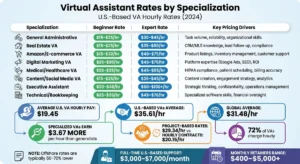
Virtual assistant hourly rates typically range from $5 to $75 per hour. Entry-level offshore roles often start at $5. Onshore US and UK specialists charge $40 or more.
Pricing depends heavily on skill level and location.
Many people assume there is one standard price. There isn't. The term covers a broad spectrum of administrative and specialized support.
A basic data entry role costs very little. A strategic executive assistant commands a premium.
The rate reflects three main factors: complexity, location, and experience. Simple email triage is low skill. Complex CRM management is high skill.
Geography shifts the cost baseline significantly. Understanding this distinction prevents budgeting errors before you even start interviewing.
Most engagements fall into one of three buckets. You need to pick the right one for your workflow. Each model has distinct pros and cons.
Hourly gives you maximum flexibility. You only pay when they work. Retainers offer predictable costs.
They build a stronger working relationship. Value-based pricing is risky. It requires clear success metrics.

If you are new to this, start with hourly. It lowers the risk. You can assess their work style first.
Once trust is built, switch to a retainer. This stabilizes your monthly burn rate.

Money is the biggest variable here. We look at skill level first. Then we adjust for where the VA lives.
This two-step process explains most rate differences.
Basic admin tasks pay the least. Think email management, calendar scheduling, and light data entry. These roles require standard proficiency.
No specialized software knowledge is needed.
Specialized roles pay double or triple. Consider a VA who manages Shopify stores. Or one who runs paid social ads.
These skills require specific training. They drive direct revenue. You pay more for that expertise.
Location drives the base rate. US and UK VAs charge premium prices. They share your time zone.
Communication is seamless. Cultural context aligns easily.
Offshore hubs like the Philippines or India are cheaper. Rates drop significantly. But you deal with time zone differences.
Cultural nuances might need extra training. Both have valid use cases.
| Skill Level | Offshore Range | Onshore Range |
|---|---|---|
| Entry-Level Admin | $5 – $12 | $20 – $35 |
| Mid-Level Specialist | $15 – $25 | $35 – $55 |
| Senior Executive | $30 – $45 | $75 – $150+ |
These numbers come from aggregate industry surveys. They reflect the current market reality. Use them as a benchmark.
If a quote is far off, investigate why. It might be a red flag. Or it might be a niche premium.
You have a budget. You have tasks. Now you match them.
Do not just hire the cheapest option. Hire the right fit. The wrong fit costs more in the long run.
A generalist handles many small things. They are great for inbox cleanup. They manage travel bookings.
They are not specialists. If your tasks are routine, they are the best value. You should look at our guide on everyday administrative duties to see what fits here.
A specialist goes deep in one area. Think SEO writing or CRM automation. They cost more per hour.
But they save you huge time elsewhere. For high-stakes roles, consider what a dedicated executive support partner brings to the table.
Agencies offer backup coverage. If one person gets sick, another steps in. This reliability costs a 20 to 30 percent markup.
Independents are cheaper. But you bear the full risk of no-shows.
If you need strict SLAs, pay for the agency. If you have a tight budget, hire independent. But vet them carefully.
Check their references. Review their portfolio. You can also look at the long-term advantages of outsourcing to justify the spend.
Most hiring failures come from unclear scopes. You think you are paying for email management. They think they are also doing content creation.
This confusion breeds resentment. It kills productivity fast.
Scope creep is the silent budget killer. Small requests pile up. Then the bill balloons.
You realize you paid $500 for what you thought was a $100 task. Prevent this with written agreements. Define exactly what is included.
Use a clear task checklist as a baseline.
Are you the VA? Do not underprice yourself. Beginners often race to the bottom.
They charge $5 to get a client. That client expects $5 worth of output. It is hard to raise prices later.
Set your floor. Know your worth. Consider which core competencies justify a higher rate.
Free unlimited tasks are a trap. For you as the VA, they guarantee burnout. For the client, they often lead to quality drops.
Both sides suffer. Set clear boundaries. Track time meticulously.
Our guide on efficient time logging can help you build those habits early.
Money is only part of the picture. Legal classification matters too. You need to know if you are hiring an employee or a contractor.
This affects taxes. It affects liability.

The IRS uses 20 factors to decide status. Control is the biggest one. If you dictate how, when, and where they work, they may be an employee.
If they control their own methods, they are a contractor.
Misclassification leads to fines. It leads to back taxes. It is a serious risk.
Use a standard contractor agreement. Get legal advice if you are unsure. The risk is not worth the gamble.
You share sensitive data. Your VA sees passwords. They access customer lists.
You need protections. An NDA covers confidentiality. IP clauses ensure you own the work.
Use strong security protocols. Mandate two-factor authentication. Require a password manager.
If you hire a medical assistant, HIPAA compliance is non-negotiable. For real estate, privacy rules apply. Check the specific regulations in your industry.
Do not let convenience skip the safety checks.
You have the numbers. You have the models. Now you decide.
The right structure depends on your workload. Pick the setup that matches your volume and your risk tolerance.
Use hourly for unpredictable or one-off tasks. Startups exploring what to outsource fit here. Use a retainer when work is steady and repetitive.
You want the same person every week. The decision comes down to volume and consistency. If you only need 10 hours a month, hourly wins.
If you need 40, lock in a retainer.
The Bureau of Labor Statistics tracks median administrative wages. That gives you a national floor to compare any quote against.
Pick a baseline. Adjust for skill. Adjust for location.
Then adjust for risk.
This framework keeps your pricing defensible. If you are the VA, it protects you from underpaying yourself. If you are the client, it stops you from overpaying for basic work.
A fair rate sits between $15 and $40 per hour for most small business tasks. Entry-level offshore VAs charge $5 to $15. US-based specialists charge $40 to $75.
Compare quotes against national pay benchmarks for a clear reference point.
VAs cost 30 to 50 percent less. You avoid payroll taxes, benefits, and office space. A full-time assistant costs $45,000 to $70,000 annually.
A part-time VA on a retainer often costs under $2,000 per month.
Yes, expect a 20 to 30 percent markup. Agencies offer backup coverage and vetting. Independents are cheaper but carry no-show risk.
Choose based on how critical continuity is to your business operations.
Yes, but not much on experienced specialists. You can negotiate on volume. Offer a retainer instead of hourly.
Add a longer contract term. Rate flexibility exists mostly with entry-level VAs looking for their first client.
Every 6 to 12 months. Rates rise with experience and market demand. A VA who learns new tools deserves a raise.
Reviewing too rarely breeds resentment. Reviewing too often is a waste of time.
No, not for independent contractors. They file their own taxes. You request a W-9 or W-8BEN for documentation.
Check the IRS contractor guidelines for filing rules. Misclassifying a contractor as an employee creates real liability.



















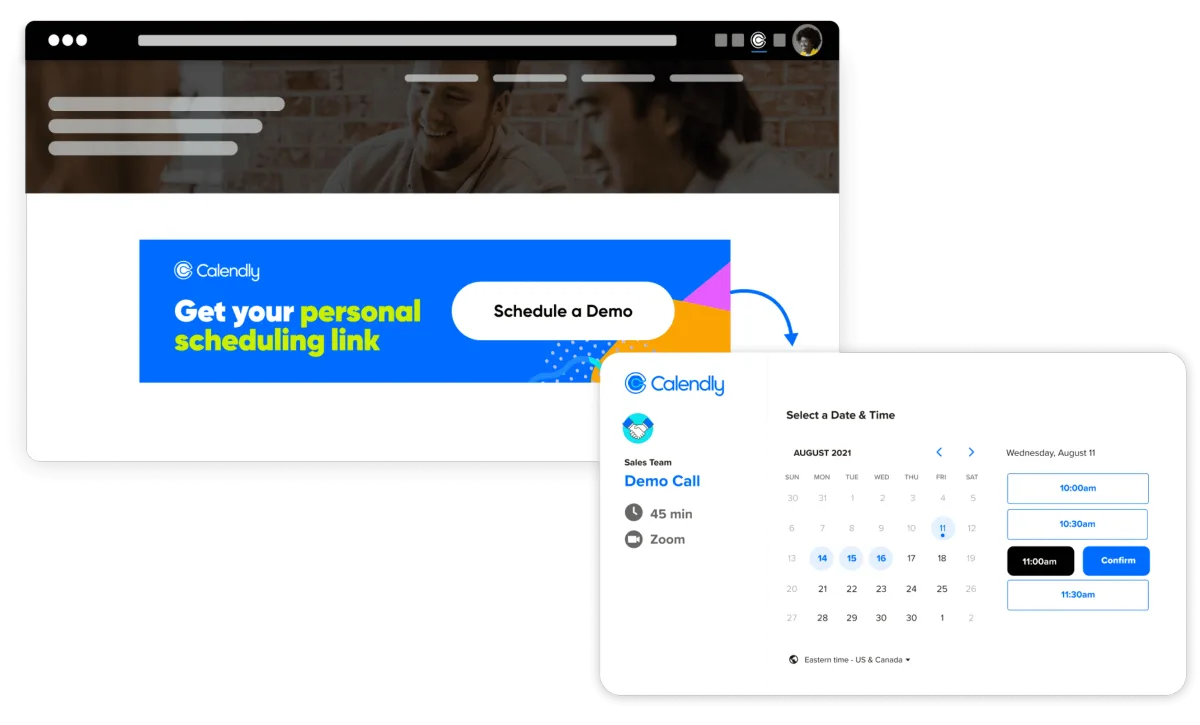
You’re drowning in meeting requests and your calendar looks like a war zone. Virtual assistant Calendly management is the fix that lets a trusted helper handle…
You’ve got too many meetings and not enough hours. A virtual assistant for Outlook Calendar can fix that, but only if you pick the right type. We’ll walk…

You’ve got a packed week and zero time to juggle calendar tabs. A virtual assistant to schedule Google Meet can take that load off, but the options aren’t all…